Quick Summary
Intercom's Fin AIis a capable AI support agent, but its $0.99-per-resolution pricing becomes expensive fast, and it only handles support well. This guide covers the 7 best alternatives across the full range, from free SMB tools to enterprise platforms, including one that generates leads instead of just deflecting tickets. Fin AI sounds cheap, but pricing scales extremely fast. Even for SMB's. Which is why "Intercom Fin alternatives" has been one of the fastest-growing support software queries of 2026.
Here are our top three picks:

Why trust us?
We built Weply because we saw how businesses loose potential customers on their webiste, by either having no chat as a communication channel, having a live chat but only manned during opening hours, or chossing an AI chatbot - made and trained for support - not suited for converting high-intent traffic to qualified leads. In 2025 alone, Weply generated over 250.000 qualified leads for 2.400+ customers across the Nordics and Europe. We have operated since 2013 and seen it all. This gives us a clear-eyed view of where Intercom Fin fits, where it doesn't, and which alternatives actually deliver at different budgets and use cases.
What Fin actually costs
The $0.99 number looks reasonable in a sales deck. It stops looking reasonable around month three. Here's the math Intercom doesn't tell: If you have 10 agents on the Advanced plan ($85/seat/month), your baseline Intercom bill is $850 a month before Fin touches a single ticket. Add 1,000 Fin resolutions, not a particularly high volume for a team that size, and you're at $1,840 a month. Push to 3,000 resolutions and you're past $3,800. Add Copilot ($35/agent/month) for the agents who handle what Fin can't, and the number climbs again.
None of this is hidden. Intercom publishes it. But the compounding effect surprises a lot of finance teams when the first big invoice lands.
Why teams look for alternatives
1. The billing model punishes success. The more effectively Fin works, the more it costs. For teams with high support volume, per-resolution pricing isn't outcome-based. It's a variable tax on your growth. A team handling 10,000 resolutions a month is paying $10,000 in Fin fees before any other costs. At that scale, per-seat alternatives with flat monthly fees often work out significantly cheaper.
2. Fin is tied to the Intercom ecosystem. Fin works cleanest inside Intercom. You can deploy it as a standalone agent in front of Zendesk or Salesforce, but that adds integration complexity and you still pay the $0.99 per resolution either way. Teams that aren't already committed to Intercom end up buying the AI agent and effectively inheriting pressure to adopt the rest of the platform.
3. Fin handles support. It doesn't generate pipeline. This is the constraint that rarely appears in Fin reviews. Fin deflects tickets. It answers product questions, looks up order status, handles returns. What it doesn't do is convert an undecided website visitor into a lead, qualify sales intent, or push warm prospects into your CRM. If your chat function is supposed to do anything other than reduce support volume, Fin isn't built for it.
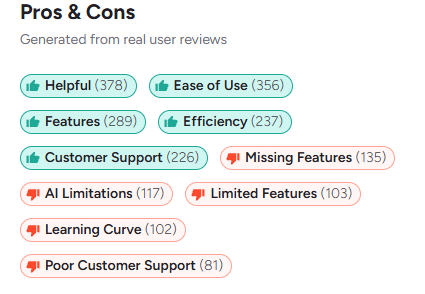
Before you choose: one question worth asking
Most alternatives articles give you a ranked list and call it a day. That's not useful, because the right answer depends on what you actually want to change.
Do you want to swap the AI layer only, or replace the whole platform?
If you want to keep Intercom and just reduce Fin's costs or add capabilities it lacks, your shortlist is different from someone who wants to walk away from Intercom entirely.
→ Keep Intercom, replace or supplement Fin: Look at Chatbase or Freshdesk's Freddy AI, which can run as a standalone agent in front of your existing helpdesk. HubSpot's Breeze Customer Agent is also worth considering if your CRM is already HubSpot. If you want to do customer support and lead generation while integrating to Intercom, consider Weply.
→ Replace the whole platform: Look at Zendesk AI.
→ You want chat to generate revenue, not just sav cost: Weply is the only option in this list built specifically for that outcome.
With that framing established, here are the eight alternatives worth evaluating.
1. Weply
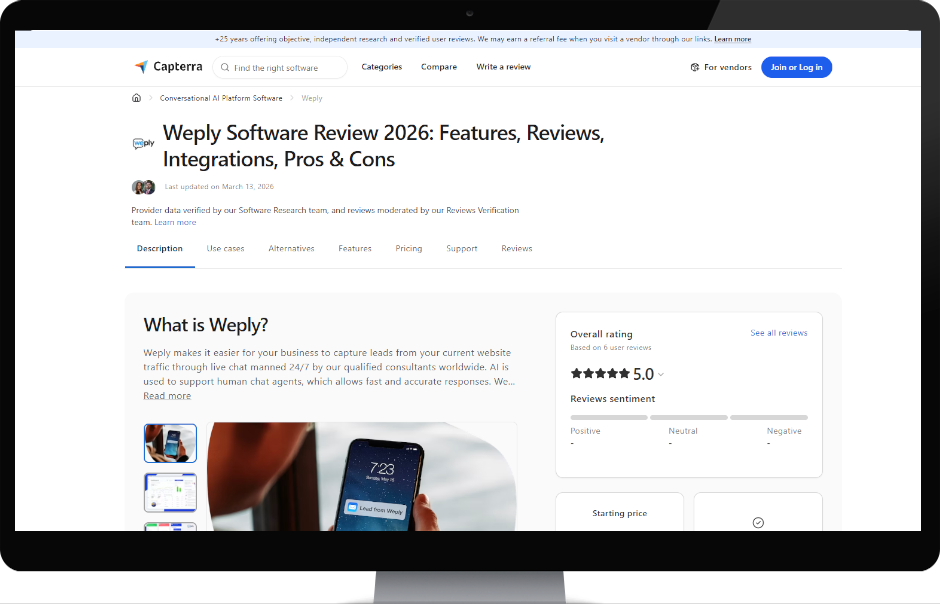
Weply is the only tool on this list that isn't primarily a support platform. That distinction matters if you've been thinking of chat as a cost centre when it could be doing more.
Every other alternative here deflects tickets, reduces support volume, and helps your team handle more with less. Weply does that too, but it also actively works the other side of the funnel. Trained human chat consultants, available 24/7, qualify leads from website visitors and push them into your CRM with context. The AI layer (WeAssist) handles support queries, and is included in the base subscription. Humans are always in the loop, which eliminates hallucination risk on support conversations and means your leads are pre-qualified by a person, not a bot pattern-matching on keywords. The lead qualification demands are set by you, and thereby custom for each company.
The result: Normally 2x more leads. And contrary to AI chatbot, the leads have been qualified to meet your lead crieteria.
Key Features
- 24/7 human + AI hybrid: Chat consultants run every conversation, with WeAssist handling standard support queries. Customers always interact with a human, which consistently produces higher conversion rates than automated-only chat.
- Lead qualification direct to CRM: Weply pre-qualifies visitors against your criteria and delivers named, warm leads, with the contact information you want, to your inbox or CRM.
- WeSights analytics: Dashboard covering chat volume, campaign attribution, lead quality, and conversion patterns. Helps connect chat activity to marketing spend.
- Dedicated Customer Success Manager: Included on all plans. An actual person responsible for your results.
Pricing
Monthly subscription from $69, covering up to 100 support chats with WeAssist included. Lead fees are charged per qualified lead, based on your defined qualification criteria. 7-day free trial, no credit card required.
Pros
- The only alternative here with active lead generation built in. Not a support tool with a lead capture form bolted on.
- Human-verified responses mean much less hallucination risk on live support conversations.
- Converts 2x more chat visitors into qualified leads than pure AI chatbots, based on internal customer data.
- Transparent, predictable pricing with a per-lead model.
- Validated by more than 2.400 customers live.
Cons
- Chat only. No voice, email, or social channels yet.
- WeSights is an add-on, not included by default.
- Not the right fit if all your chat traffic is only support-related with no commercial intent.
Rating
Capterra: 5/5. Customers consistently cite lead quality and volume improvements over their previous AI-only chat setup.
2. Zendesk AI
Zendesk is the default choice for support teams that need a mature, full-featured helpdesk and are willing to pay for it. With 22,000+ customers globally, its routing, SLA management, and omnichannel capabilities are genuinely enterprise-grade once configured. It makes the most sense for teams of 15+ internal support agents where organisational structure and ticket workflow start to matter as much as raw AI performance. The catch with Zendesk's AI story is the pricing structure. The headline per-agent price is real, but it's not the whole story. To get AI features worth comparing against Fin, you need the Advanced AI add-on at roughly $50/agent/month on top of your Suite plan. AI-automated resolutions are billed separately at $1.50 per committed resolution or $2.00 pay-as-you-go. A 20-agent team on Suite Professional with Advanced AI is therefore looking at close to $40,000 a year before implementation.
Key Features
- Omnichannel unified workspace: Email, live chat, phone, WhatsApp, social media and web forms in one agent view.
- AI Triage and routing: Classifies tickets by intent, language and sentiment before a human sees them. Sends conversations to the right agent tier based on skills and current load.
- Zendesk Copilot: Suggests replies, surfaces knowledge articles, and summarises long threads for agents in real time. Available as the ~$50/agent/month add-on.
- AI-automated resolutions: The AI agent handles queries it can resolve fully, charged at $1.50–$2.00 per completed resolution.
- Reporting via Explore: Customisable dashboards at Professional and above, tracking CSAT, response time, resolution rates, and agent performance.
Pricing
From $55/agent/month. AI resolutions: $1.50-2 per committed resolution.
Pros
- The most proven full customer support platform at enterprise scale in the market.
- Comprehensive integration ecosystem .
- Skills-based routing and SLA management work well for large teams.
Cons
- The AI features that actually compete with Fin require the Advanced AI add-on that many teams don't budget for during the buying process.
- Zendesk's own support quality is a consistent complaint on G2: slow responses, link-heavy replies.
- Per-agent pricing scales directly with headcount with no outcome-based option on core plans.
Rating
G2: 4.3/5 across 6,800+ reviews. Satisfaction correlates strongly with team size. Small teams often find they're paying for features they haven't configured yet.
3. Tidio
Tidio is the clearest SMB alternative to Fin, and probably the fastest to deploy of anything on this list. The platform combines live chat, a no-code chatbot builder, and Lyro, its conversational AI agent, in a single product. It's particularly strong for Shopify merchants and e-commerce teams that want to handle chat, email, and social from one place without committing to an enterprise contract.
Key Features
- Lyro AI agent: Answers questions based on your support content, handles hand-off to human agents when needed, and runs 24/7.
- Flows builder: No-code drag-and-drop chatbot for creating automated conversation paths.
- Multichannel inbox: Website chat, email, Instagram, Messenger, and WhatsApp managed from one view.
- Live typing preview: Agents see what the customer is typing before they send it.
- Shopify-native: Order lookup, product data, and customer details visible to agents within the chat window.
Pricing
Starter from $29/month. Growth from $59/month. Advanced $749/month. Lyro AI available as a standalone add-on from $39/month for additional conversation quota. Known for heavy price increases to existing customers.
Pros
- G2 4.7/5, one of the highest-rated tools in this category.
- Conversation-based pricing is more predictable than per-seat for smaller teams.
- Live in minutes. Shopify integration is genuinely seamless.
Cons
- Data processing happens primarily in the EU, but some data is also transferred to the US.
- Best for e-commerce. Only to be used for customer support.
- Not suited to complex enterprise workflows, multi-team SLA management, or large agent pools.
Rating
G2: 4.7/5. Users consistently mention ease of setup and the Shopify integration. Most criticism centres on pricing changes.
4. HubSpot Breeze Customer Agent
If your CRM is HubSpot and your support team already lives in Service Hub, HubSpot's Breeze Customer Agent is probably the path of least resistance. It runs inside your existing HubSpot setup, draws on your CRM data and knowledge base without additional integration work, and as of April 2026, moved to outcome-based pricing at $0.50 per resolved conversation. That's half the cost of Fin per resolution. Combined with a reported 65% average resolution rate across 8,000 activated customers, the economics are notably better for teams with high volume.
The important constraint: Breeze Customer Agent requires Service Hub Professional at a minimum, which starts at $90/seat/month. If you're not already on Professional or Enterprise, you're looking at a meaningful plan upgrade as a prerequisite.
Key Features
- CRM-grounded AI: The agent draws on your full HubSpot customer data, relationship history, and knowledge base.
- Nine channels supported: Chat, email, WhatsApp, Facebook, Instagram, Telegram, LINE, and SMS.
- 28-day free trial: New as of April 2026 alongside the outcome-based pricing shift.
- Outcome-based pricing: $0.50 per resolved conversation.
Pricing
Breeze Customer Agent: $0.50/resolved conversation (60 free/month on Pro, 100 on Enterprise). Requires Service Hub Professional at $90/seat/month or Enterprise at $130/seat/month. Mandatory onboarding service approximately $1,500 on Professional plans.
Pros
- Half the per-resolution cost of Intercom Fin.
- Best option if your stack is already HubSpot Service Hub. Minimal integration work.
- 65% average resolution rate with full CRM context.
- Most competitive outcome-based customer support pricing of any tool on this list.
Cons
- Only practical if you're already in HubSpot and has bought their service hub. Adopting it as a standalone requires committing to HubSpot's ecosystem.
- Get expensive with the mandatory purchases of additional Hubspot products.
- Mandatory onboarding fee adds to the initial cost.
Rating
G2: 4.4/5. Users value the CRM context and the unified view of customer history. Common criticism: the platform's breadth can create complexity for teams that only want the Hubspot support module.
5. Freshdesk + Freddy AI
Freshdesk is the most commonly cited alternative when teams leave Zendesk on cost grounds, and it handles a lot of the same use cases for less money. The Freddy AI suite, Freshworks' AI product line, is built into Freshdesk's higher plans and works across the Freshworks stack, which includes Freshchat for live chat.
Freshdesk uses a session-based model for its AI agent rather than per-resolution pricing. A session counts any unique user who engages with Freddy, resolved or not.
Key Features
- Freddy AI Agent: Handles frontline queries via chat and email. Trained on your Freshdesk knowledge base. Performs actions like order lookups and ticket creation.
- Freddy Copilot: Suggests replies, summarises tickets, and drafts knowledge base articles for human agents. Available as an add-on.
- Freshchat integration: The live chat product that pairs with Freshdesk for omnichannel support. Add-on.
- Skills-based routing and SLA management: Available from higher tiers.
Pricing
Freshdesk Growth: $15/agent/month (email and ticketing). Pro: $49/agent/month (includes Freddy AI agent, 500 sessions/month included). Enterprise: $79/agent/month. Additional Freddy AI sessions: $49/100. Freddy Copilot: ~$29/agent/month add-on.
Pros
- Significantly cheaper than Zendesk at comparable tiers, especially for teams primarily managing email.
- G2 4.4/5. Well-established with a large user base.
- Per-session model is easier to forecast than Fin's per-resolution model for teams with consistent traffic.
Cons
- Freddy AI only responds to the first email in a thread. Follow-up messages require human handling.
- G2-reported resolution rates from case studies: 23–30%, notably lower than Fin's 60% average or HubSpot's 65%.
- Session billing counts engagements, not resolutions. You pay for conversations Freddy doesn't resolve.
- Need to use the Freshdesk suite of products to gain real value.
Rating
G2: 4.4/5. The Freshwork platform itself is well-regarded. Freddy AI specifically receives more mixed feedback, with common criticism around setup complexity and the session cost ceiling.
6. Chatbase
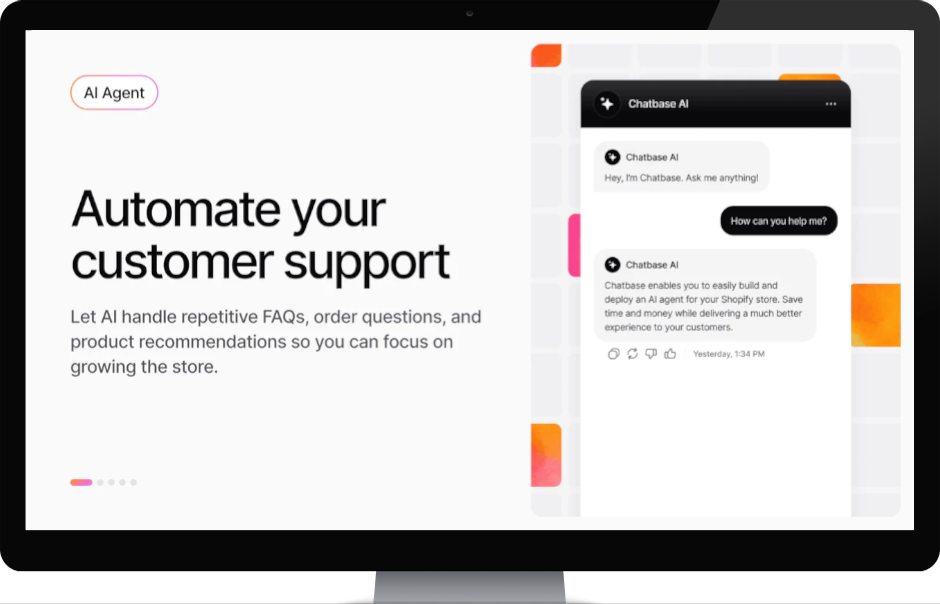
Chatbase is the fastest path from zero to a deployed AI chatbot. Upload your documentation, link to your knowledge base or Notion, and you have a functioning AI agent on your website in under an hour. No developer required. Used by 10,000+ businesses. It's worth being clear about what Chatbase is and isn't. It's a no-code chatbot builder, excellent for handling frequently asked questions and reducing inbound support volume for businesses that don't have a helpdesk team or need something running quickly. It's not a replacement for a full support platform, and its workflow automation capabilities are limited compared to Zendesk or Intercom.
One pricing note: Chatbase charges per message, not per conversation. A single back-and-forth exchange can consume multiple credits depending on the AI model you've selected.
Key Features
- RAG-based training: Train on URLs, PDFs, Notion pages, or uploaded documents. The chatbot answers from your content and cites sources.
- Multichannel deployment: Website widget, Shopify, WhatsApp, Instagram, Facebook Messenger, and Slack via native integrations.
- AI Actions: Update Stripe subscriptions, create Zendesk tickets, fetch Salesforce order data. .
- Model flexibility: Choose between economy models (GPT-4o Mini, Claude Haiku) and premium models (Claude Sonnet) based on cost and quality needs.
Pricing
From $40/month + credit usage.
Pros
- Fastest time-to-live of any tool on this list.
- No coding required. Accessible to non-technical teams.
- Model selection gives you control over cost vs quality.
Cons
- Metered by message, not conversation . Costs can be harder to predict than they look and it can become fast very quick. Credit costs makes it hard to use newer LLM models.
- Limited workflow logic. Not suited for complex escalation flows or multi-step automation.
- Output quality is directly tied to the quality of your documentation. Poor knowledge base, poor results.
- Can only be used for customer support chats. Do not do a good job in lead conversion.
- Data processed in the US. Not an option for most European businesses.
Rating
Capterra: 4.3/5. Easy setup and quick deployment are consistently praised. Pricing on higher plans and limited workflow capability are the most common criticisms.
7. Sierra.ai
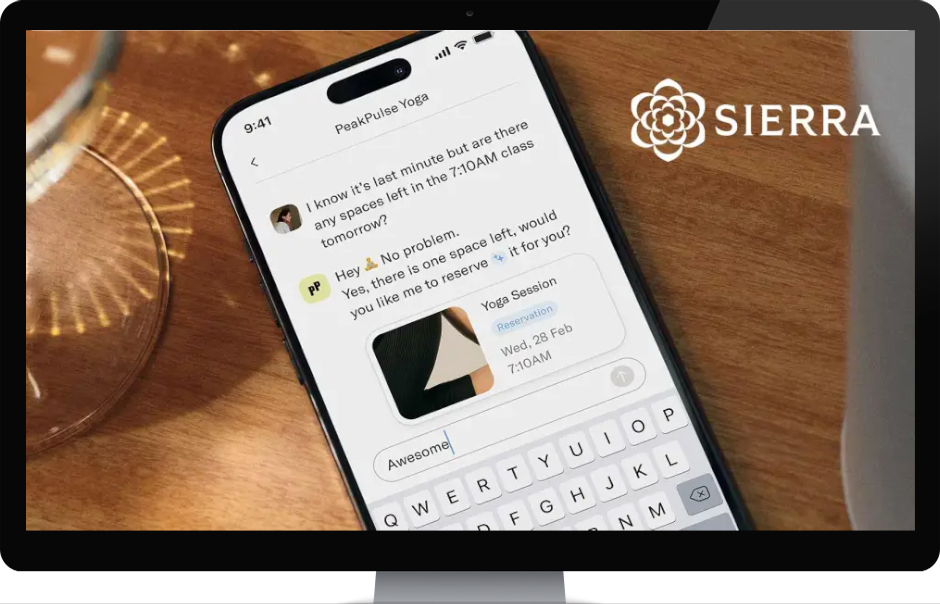
Sierra.ai is the highest-profile name in enterprise AI customer service right now, founded in 2023 by Bret Taylor (former Salesforce co-CEO, current OpenAI board chair) and Clay Bavor. It's raised $950 million and counts Sonos, SiriusXM, Weight Watchers, and Casper among its customers. The platform handles voice and chat at scale, and its Ghostwriter feature generates production-ready AI agents from existing SOPs and call transcripts, reducing the time from contract to deployment significantly. Sierra is relevant to this list for completeness, not because it's a realistic alternative for most teams reading this article. The effective minimum to work with Sierra is ~$150-200,000 in year one when you factor in platform fees and implementation. If that's your budget range, Sierra is worth a serious evaluation. If it isn't, choose another tool.
Key Features
- Empathetic AI agents: Built to mirror brand voice precisely across complex interactions such as returns, subscription management, account changes handled autonomously.
- Ghostwriter: Generates deployable AI agents from SOPs, call recordings, and support transcripts. Also runs automated improvement cycles on live interactions.
- Decagon Voice 2.0-comparable voice: Sub-second latency on voice interactions, branded caller IDs, interruption handling.
- Multi-model architecture: Runs multiple AI models in parallel for accuracy checking, which reduces hallucination but can introduce latency on voice.
Pricing
No public pricing page. Third-party estimates: annual contracts from $150,000+. Implementation and onboarding: $50,000–$200,000. Outcome-based pricing per resolved conversation at undisclosed rates with minimum volume commitments.
Pros
- One of the strongest voice + chat combinations in the market.
- Ghostwriter materially reduces deployment time compared to traditional enterprise AI implementations.
- Proven results at global consumer brands with high support volume.
Cons
- Pricing puts it out of reach for any team without a substantial CX budget.
- Support only. No lead generation capability.
- No self-serve access or free trial.
Rating
G2: 4.4/5. Positive sentiment around empathetic AI quality and deployment support. Most criticism concerns pricing opacity and onboarding complexity.
How to choose
The right choice depends less on feature comparisons and more on what you actually need from chat. Or if you need a complete support platform.
If you need to generate revenue from chat, not just manage support volume then Weply is the only tool here built for that. The others are support platforms or support chats.
If you're already deep in HubSpot and want the cheapest per-resolution pricing then Breeze Customer Agent at $0.50/resolution is the most cost-effective AI-only option right now. It require you have bought Hubspot Service Hub as a minimum.
If you're a team of 15+ agents needing proper enterprise helpdesk infrastructure you will not go wrong with picking Zendesk, as it is still the most mature platform.
If you're SMB and need something affordable and live quickly for customer support only then consider Tidio from $29/month.
If you're an enterprise in a regulated industry with complex compliance requirements you should choose Ada or Sierra.
If you just need an AI customer support chatbot running on your site within the hour and can live with data hosted in US then Chatbase.
Try Weply free for 7 days, no credit card, no commitment, and see what it adds to your pipeline this week (all qualified leads free of charge)
FAQ
Can I use Intercom Fin without the rest of Intercom?
Yes. Fin can be deployed as a standalone AI agent in front of Zendesk, Salesforce, HubSpot, or most other helpdesks. You still pay $0.99 per resolution, and the is a minimum commit of $49 per month.
What does Fin AI count as a resolution?
A resolution is a conversation where the customer confirmed their issue was solved, or where they didn't respond after Fin's answer within a set time window (implying the answer was sufficient). The second part, the non-response trigger, is the one teams debate most. A customer who got a partial answer and gave up, or who simply got distracted, can still generate a billable resolution. Fin AI isn't unique in this ambiguity, but it's worth understanding before you project your monthly costs.
What is the cheapest Intercom Fin alternative?
For teams already in HubSpot Service Hub, Breeze Customer Agent at $0.50/resolution is the cheapest outcome-based AI alternative on this list. For teams without an existing platform, Tidio starts at $29/month, Chatbase starts at $40/month with a basic AI chatbot and Weply starts at $69 for a hybrid solution with human chat experts and AI, and doing both customer support and lead egenration.
Is Intercom Fin good?
Fin is a well-built product with a 60% average resolution rate across its customer base and clean integration within the Intercom platform. The criticism it gets is rarely about quality, it's about pricing structure and fit. If your support volume is moderate and you're already committed to Intercom, Fin works fine. The alternatives in this list are for teams where the per-resolution billing is creating budget problems, or where chat needs to do more than deflect support tickets.
Which Fin alternative is best for lead generation?
None of them, with one exception. The tools on this list, Zendesk, Tidio, Freshdesk, Ada, HubSpot, Chatbase, Sierra, are support platforms. They handle incoming queries and reduce ticket volume. Weply is the only alternative that actively generates and qualifies leads from website visitors. If your chat function is supposed to fill pipeline as well as handle support, Weply is the only tool in this category built for that outcome.

![How to Get Your Brand Into Google AI Overviews [2026 update]](https://cdn.prod.website-files.com/687998866aa498f98160dbb6/69a6d966299d1892b3fc1f8c_Blog_post_header_AI_Overviews.png)
![LLM Seeding: The Complete Guide to Getting Your Brand Cited in AI Search Results [2026]](https://cdn.prod.website-files.com/687998866aa498f98160dbb6/6a8630ea63f85f3d690eeaab_llm-seeding-guide.png)



.png)







.png)