Your analytics data doesn’t lie, but it doesn’t tell the whole story
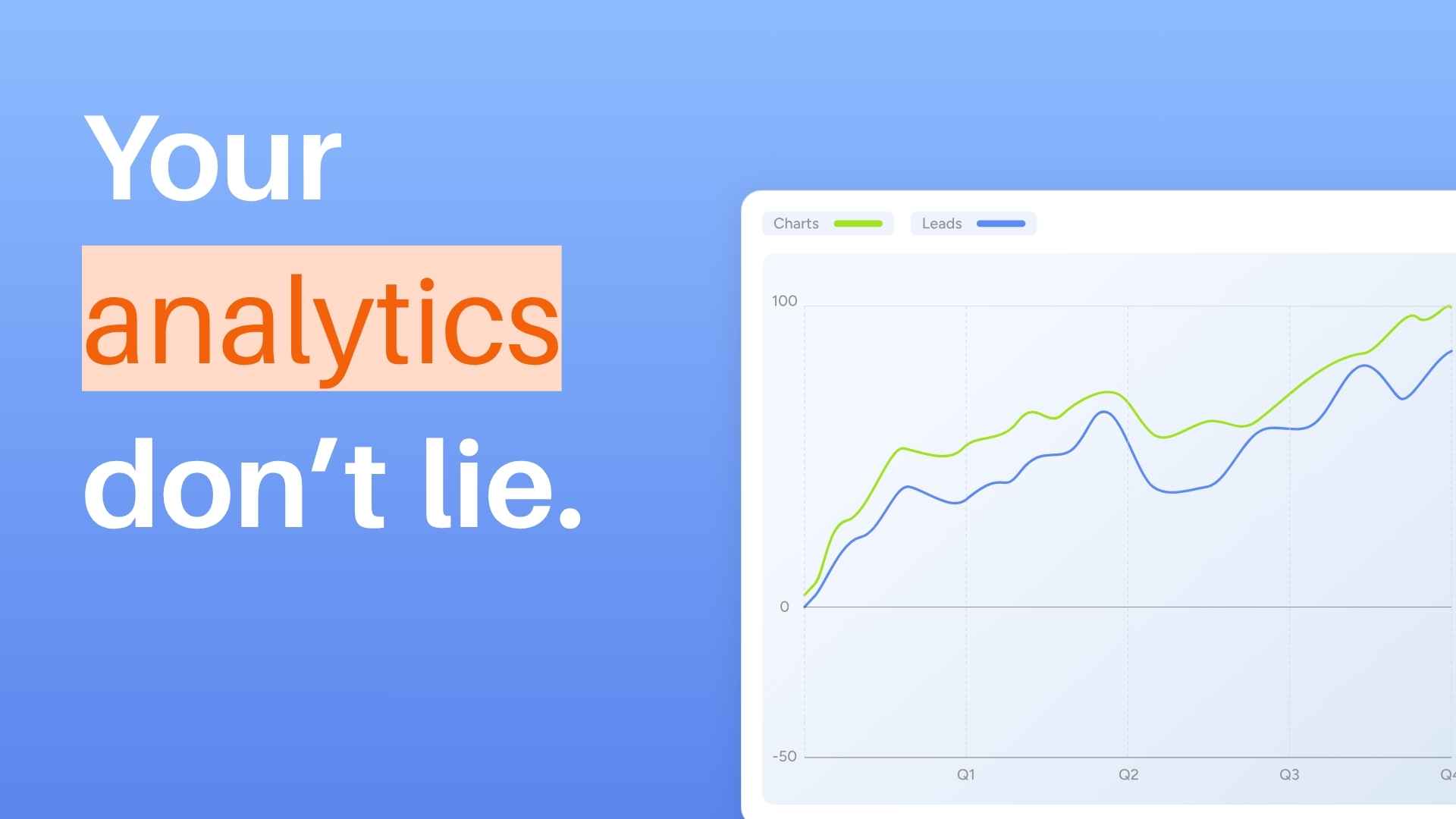
You know where your visitors come from. You know which pages they visit. But do you know what they actually want, and why they don’t convert? That’s the difference between traffic data and intent data. And that difference is decisive.
Analytics gives you behaviour, not motive
Google Analytics, GA4 and Hotjar are effective tools for measuring what happens on your website. A visitor arrived from a Google Ads campaign, landed on the product page, scrolled 60% and left after 45 seconds.
But why did they leave? Were they not ready to buy? Did they need a specific answer? Couldn’t they find the price? Was it simply the wrong product?
You don’t know, unless you asked them.
That’s exactly what a staffed live chat does. Not like a form that collects contact details, but as a conversation that reveals where in the buying process the visitor is, and what’s actually stopping them from taking the next step. As many as 44% of online customers say the most important thing a website can offer is the ability to get questions answered in real time by a real person.
Intent data: what it is and why it’s worth more than page views
Intent data is information about what a potential customer is actually trying to accomplish. It’s not just which keyword they used - it’s what they asked about, what concern they expressed, and which decision they’re trying to make.
97% of B2B marketers believe intent data gives their company a competitive position. 98% say it is crucial to their marketing and sales work. (Inbox Insight) Yet most SMEs still collect almost exclusively behavioural data, not intent data.
Concretely: a visitor who chats and asks “What does it cost to install solar panels on a 200 sqm house?” tells you three things immediately:
- They are in an active buying process (not just researching)
- Price is their primary decision parameter
- They have a specific object in mind - not a general curiosity
No page view in GA4 can give you that information. It requires a conversation.
Even non-converting chats are business data
Here’s the underestimated insight: a visitor who chats without converting is not a failed visit - it’s a data collection opportunity.
Compare what you know about these two visitors:
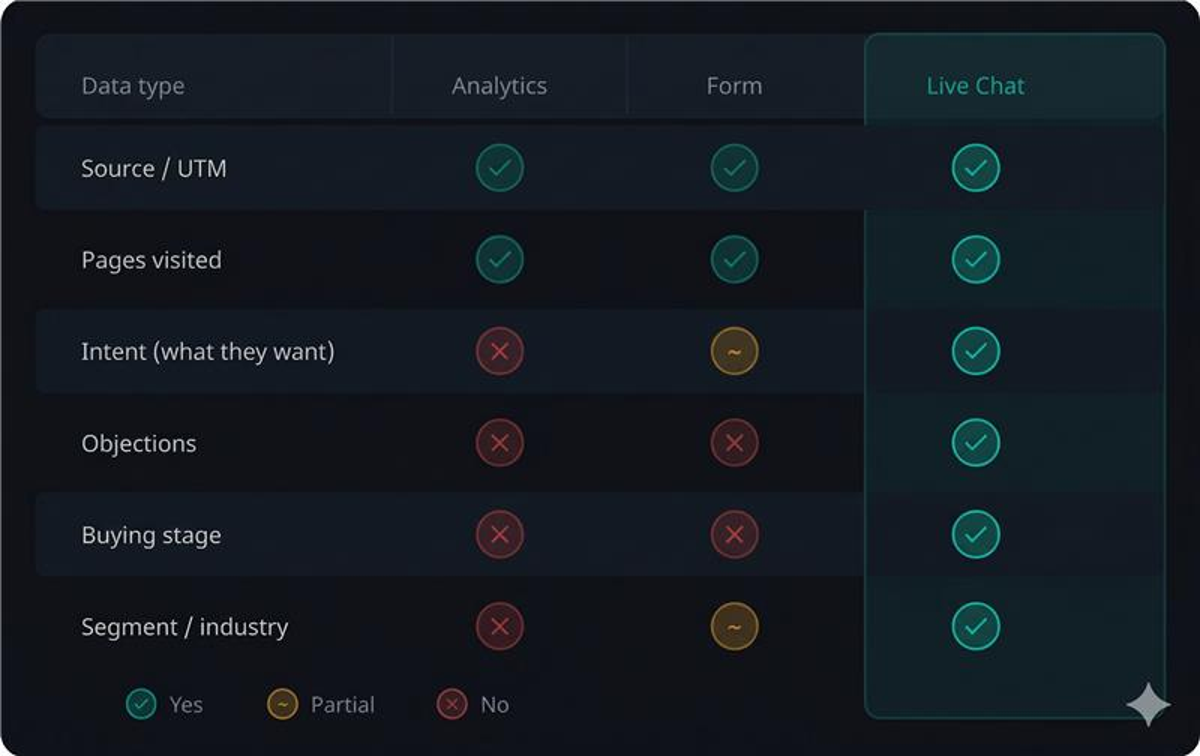
- Visitor A: Came from a Meta ad, visited three pages, left. You know source and behaviour.
- Visitor B: Came from a Meta ad, chatted and asked about financing, did not convert. You know source, behaviour, intent, objection and buying stage.
Visitor B gives you the basis to:
- Adjust the ad creative - if financing is a common question, it should be visible in the ad
- Optimise the landing page - add a section on financing options
- Train the sales team - financing is a recurring objection, not an exception
Companies using intent data report 82% faster lead conversion and 90% increased lead volume. Aggregated across hundreds of conversations per month, you get a qualitative market insight that no heatmap analysis or A/B test can match.
Combine intent with attribution and you have a competitive edge
UTM parameters and forms can tell you where a lead came from. But the combination of source + intent is what truly drives smart marketing decisions.
Imagine being able to answer:
- Which channels drive visitors asking about price (high purchase intent) versus visitors asking how it works (early research stage)?
- Which campaign drives the most qualified interest, not just clicks?
- Which geographic market has the least friction in the buying process based on conversation content?
Companies with data-driven marketing are six times more likely to be profitable year over year compared to competitors who lack it. That’s information your competitor doesn’t have, unless they work the same way.
Why staffed live chat delivers better intent data than pureAI chat
A chatbot can answer common questions. But 70% of consumers prefer human agents over AI technology for complex queries. This matters especially in industries like solar panels, heat pumps, construction, or B2B services where the purchase decision is significant, the investment is high and the questions are complex.
A trained human chat operator does three things automatically:
- Identifies buying stage based on how the question is asked, not just what is asked
- Handles objections in real time and captures what is actually blocking conversion
- Qualifies leads actively, not passively, and documents relevant information
The results show in the numbers: visitors who chat with a human agent are 2.8 times more likely to convert. Companies report an average 20% increase in conversion rate after introducing live chat on their websites. (Invesp) And every conversation, regardless of outcome, contributes to a deeper understanding of your market and your customers.
A concrete example: the heat pump company that optimised ads using chat data
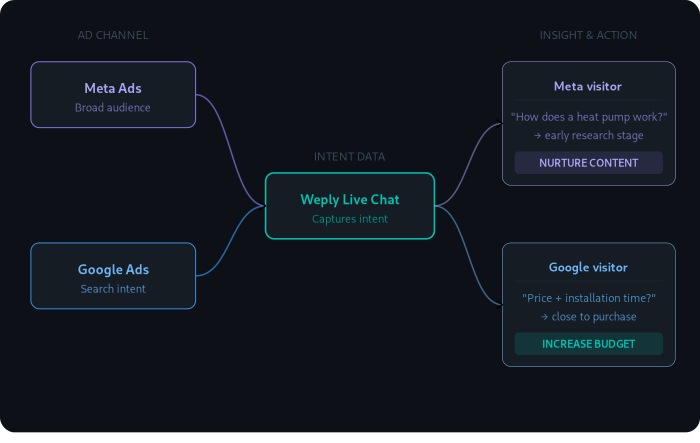
Imagine a company selling heat pumps running parallel campaigns on Google and Meta. GA4 shows that both channels deliver similar traffic volumes and roughly the same number of form submissions.
But the chat data tells a different story:
- Google visitors frequently ask about specific models and installation timelines - they are close to a decision
- Meta visitors ask how different types of heat pumps work and what they cost in general - they are in early research
With that insight, the marketer can allocate more budget to Google (high intent), adapt Meta ads towards informational content rather than sales messaging, and set up a nurture sequence for Meta leads. All based on data that would never have emerged from GA4 or forms alone.
Conclusion: don’t just measure traffic - understand it
Most marketing managers have a good grasp of where their traffic comes from. Fewer know why it doesn’t convert better.
Intent data fills that gap. It’s the difference between optimising on clicks and optimising on understanding, and that’s where the real conversion improvements are found. 55% of marketers who have started using intent data report increased lead conversion as a direct result.
A staffed live chat solution is not just a conversion tool. It is a marketing tool that gives you insights you cannot buy from anyone else’s platform.
![How to Find Your Website's Lead Conversion Leaks with ChatGPT [including 8 prompts to use]](https://cdn.prod.website-files.com/687998866aa498f98160dbb6/6a86366654f54f6e36601151_your-website-leaking-leads.png)