Strategy, data and guidance on driving the right traffic, converting it, and making the most of every lead. From a team doing it every day across 2500+ BtB and BtC companies.
August 26, 2026
|
9
min
How to Find Your Website's Lead Conversion Leaks with ChatGPT [including 8 prompts to use]
Quick Summary
Most businesses spend serious money driving traffic to their website and almost nothing auditing whether that website actually converts visitors into leads. This guide gives you 8 copy-paste prompts and a clear process. Run them against your own webpages using ChatGPT or Claude. No tools to buy, no agency to hire. By the end, you'll have a prioritised list of exactly where your website is losing leads and what to fix first.
The Problem Most Businesses Never Audit
Traffic goes up. Leads stay flat. You've tried new headlines, changed the button colour, maybe swapped the hero image. Nothing moves the needle. Here's what usually isn't happening: a proper audit of the full path a visitor takes from landing on your homepage to becoming a lead.
The average website converts 2 to 3 percent of its visitors. The top performers convert 8 to 15 percent. The gap between those two numbers is often not better traffic or smarter ads. It's fewer leaks in the conversion path. A leak is any point where a motivated visitor quietly exits without taking the action you need them to take.
Leaks hide in obvious places: a form with no clear next step, a contact page stripped of any reason to trust you, a service page that doesn't match what the homepage promised. They also hide in less obvious ones: a visitor arriving at 9 PM with a genuine need and nowhere to turn, or a buyer who just came from an AI search tool mid-conversation and landed on a static brochure page with a contact form at the bottom and a phonenumber in the menu bar.
Most businesses have never audited for these problems systematically. They've looked at individual pages. They haven't looked at the path. This guide changes that. Eight prompts, one conversation thread with an AI, your own screenshots.
Why Listen to Us?
Weply has in 2025 alone generated over 250,000 qualified leads on behalf of 2,400+ customers across the Nordics and Europe. We've been doing this since 2013, across industries ranging from dental chains to insurance companies to fast-growing scaleups, to telco enterprises and so on.
We know what breaks conversion paths because we watch them break in real time.
Our chat consultants, backed by AI, handle the questions visitors can't get answered on a website. They capture the leads that forms lose. Across our customer base, adding managed chat produces an average 12% lift in lead conversion, and one in three chat conversations becomes a qualified lead. That data is the foundation for everything you're about to audit.
Why Use AI for This, and What You'll Need
A conversion specialist can audit your website for between EUR 3,000 and 8,000. They'll spend four to six weeks on it and deliver a PDF. The audit will be thorough, and for complex e-commerce operations, it's probably worth every cent. For most service businesses, you can surface minimum 80% of the same findings in 30 minutes using an AI. Here's why it works: AI evaluates your pages the way a first-time visitor does, without the curse of knowledge. You've looked at your homepage so many times you no longer see it. AI reads it cold. It also audits paths as sequences, which means it catches the friction that lives between pages, not just on them.
One honest caveat: this works well for service and product businesses with a clear conversion path. If you're running a complex multi-product e-commerce operation, a full specialist audit will find things this process won't. For everyone else, 30 minutes is enough to find what's bleeding leads.
What you'll need:
ChatGPT Plus, Team, or Claude Pro (the free tier works, with limitations on image uploads)
A browser
A full-page screenshot tool (GoFullPage for Chrome, Firefox's built-in screenshot function, or use mulitple screenshot directly from Claude)
30 minutes
Optional: GA4 access for one advanced prompt
Before You Start: Four Preparation Steps
Step 1: Map your conversion path. For most businesses this is Homepage, Service/Product Page, Pricing Page, Contact Page. If you're unsure which pages matter most, open GA4, go to Explore, and check the path exploration report. Three to five pages is enough to work with. Step 2: Take full-page screenshots of each page in sequence. Full-page, not just the top fold. You need the AI to see the whole page. Step 3: Screenshot your lead form and your confirmation page. The confirmation page matters because it tells you, and the AI, what promise you make to someone after they submit. Step 4: Open a new conversation in ChatGPT or Claude, upload all screenshots together, and add this context: You are a senior conversion rate optimisation specialist with experience auditing business websites. These are screenshots of my website pages in the order a visitor would see them. My business is [type of business]. My goal is to generate [desired action: enquiries / consultations / quote requests]. I'll be asking you to audit specific aspects of these pages.
Set this context once at the start. Every prompt that follows builds on it.
The Prompt Library
Eight prompts. Run them in sequence in the same conversation thread. Each builds on what came before.
Prompt 1: The First-Impression Test (copy this exact prompt) # First-Impression Audit ## Context Visitors decide within 5 to 10 seconds whether to stay or leave. This audit evaluates what's communicated before any scrolling. ## Your task Look at the first screenshot only (homepage or landing page). Based exclusively on what's visible above the fold, answer:
1. Clarity — What does this company do? 2. Audience — Who is it for? 3. Action — What should I do next? 4. Trust — Why should I believe them?
## Output format | Question | Answered? (Y/N) | What's missing or unclear | |----------|:---:|---------------------------| | What do they do? | | | | Who is it for? | | | | What should I do next? | | | | Why trust them? | | | Above-fold score: X/10
What this reveals: The failure we see most often across service websites is in row three of that table: "What should I do next?" Businesses build strong hero sections explaining what they do, then offer no visible next step. No CTA above the fold. No invitation to start a conversation. The visitor who wants to engage has to scroll, navigate, and figure the path out alone. Every step of effort they have to put in is a point where you can lose them. The good news is this is the quickest fix in the whole audit. A clear, visible CTA above the fold costs nothing to add and almost always moves conversion numbers.
Example from running the prompt on Weply's homepage
Now what we did was to run the full series of prompts on one of the most succesful current scaleups in Europe and one of the best at digital marketing, Flatpay.
This is the result from the first prompt:
Prompt 2: The Conversion Path Coherence Audit # Conversion Path Coherence Audit ## Context These pages form a sequence that visitors move through. The biggest conversion leaks often live between pages, not on them. ## Your task Evaluate all screenshots as a connected journey:
1. Message consistency — Do promises made on one page carry through to the next, or do they shift? 2. CTA consistency — Is the call-to-action language stable across pages, or does it change confusingly? 3. Orientation — Are there pages where a visitor might feel lost or unsure what to do next? 4. Distractions — What elements pull visitors away from the conversion goal (unrelated links, social buttons, irrelevant navigation)?
## Output format Score each transition between pages: | Transition | Coherence (1-10) | Key issue | |-----------|:---:|-----------| | Page 1 to Page 2 | | | | Page 2 to Page 3 | | | | (continue as needed) | | |
Overall path score: X/10
What this reveals: Messaging fragmentation is the most common path-level problem, and it's also the least visible to the people who built the site. The homepage says "Get a free consultation." The service page says "Contact us for pricing." The contact page says "Send us a message." Three different implied offers. Three moments of micro-doubt. Each transition chips away at the visitor's confidence that they're in the right place. The path should feel like one continuous conversation.
Flatpay uses a multi-step CTA journey for "calculate savings" or "get a quote", which most serves as a teaser as well as pre-qualifier for leads and Flatpay.
Flatpay results from prompt 2:
Prompt 3: The Trust Signal Inventory # Trust Signal Inventory ## Your task Across all pages, catalogue every trust signal present: customer logos, testimonials, reviews, case studies, certifications, team photos, years in business, guarantees, privacy assurances, awards, association memberships. Then evaluate:
1. Which pages have strong trust signals? 2. Which pages have weak or no trust signals? 3. Is there a trust gap specifically on the conversion page (contact or pricing page)? 4. What trust signals would you add, and where?
What this reveals: Trust signals cluster on homepages, where they're least needed, and disappear on contact pages, where they matter most. The moment a visitor is about to hand over their phone number is precisely when they need reassurance. They're asking: will someone actually reply to this? Have you done this for businesses like mine? Our chat data shows the most common questions visitors ask right before converting are trust questions: "How quickly will someone respond?" "Do you work with companies in my industry?" A single line on the contact page, "We typically respond within two hours," does more conversion work than most hero sections. Adding it takes five minutes. Flatpay results from prompt 3:
Prompt 4: The Dead Form Diagnosis # Lead Capture Form Diagnosis ## Context This is your final conversion point. A motivated visitor is about to become a lead, or quietly close the tab. ## Your task Evaluate the contact or lead form as a slightly hesitant potential customer who is ready to enquire:
1. Field count: How many fields? Which feel unnecessary for a first interaction? 2. Expectation setting: Does the page explain what happens after submission? Who responds? How soon? 3. Alternatives: Is there any option besides this form (phone, chat, booking link, WhatsApp)? 4. Urgency: Is there a reason to submit now, or could I come back to it later with no consequence? 5. Friction score: Rate 1 (effortless) to 10 (not worth the effort).
What this reveals: Forms are where conversions go to die, and the problem usually isn't the fields themselves. It's the silence around them. No indication of what happens after you submit. No alternative for the person who has a quick question but isn't ready to commit to a form submission. No urgency. Just a form floating on a page, asking for information and offering nothing in return. Our data shows that between 35 and 50 percent of chat conversations start because a visitor saw the form and decided they wanted to talk to a person instead. The form didn't convert them. A conversation did. Flatpay Results:
Prompt 5: The AI Search Visitor Test # AI Search Visitor Experience Audit ## Context A growing share of visitors now arrive from AI search tools (ChatGPT, Perplexity, Google AI Overviews, Claude). These visitors have been in a conversational research flow: asking questions, refining needs, receiving personalised guidance. They land here mid-dialogue, having just been told this website looks like a good match for their needs. ## Your task Evaluate these pages as an AI-referred visitor who was just told: "[Company] looks like a good option for your needs."
1. Conversation continuity. Can this visitor continue their dialogue, or does the experience break from conversation to static content? What engagement options exist? 2. Information redundancy. How much of this repeats what the AI tool likely already told them? What is genuinely new here? 3. Specificity gap. The visitor has a refined need. Does the site address specific use cases, or only general claims? 4. Next-step friction How many clicks stand between landing here and having a real conversation about their specific situation?
## Output format | Criteria | Score (1-10) | Key finding | |----------|:---:|-------------| | Conversation continuity | | | | Information redundancy | | | | Specificity gap | | | | Next-step friction | | | Verdict: Is this website ready for the AI search era? Single most impactful change:
What this reveals: An AI-referred visitor has been in an active dialogue. They arrive expecting to continue it. Instead they hit a static page and a form. It's like being mid-conversation with someone, then being walked to a colleague's office where that colleague hands you a clipboard. The AI will almost always point to real-time conversational engagement as the single most impactful change. Results from Flatpay analysis:
Prompt 6: The After-Hours Visitor Test # After-Hours Visitor Simulation ## Scenario It is 9 PM on a Wednesday. A potential customer lands on this website from a search. They're interested but have a specific question about the service. ## Your task
1. Is there any way for this visitor to get an answer now? 2. If they submit the form, when can they realistically expect a response? 3. What is the most likely outcome: conversion, or leaing to check a competitor? 4. What would need to change for the 9 PM visitor to become a lead?
What this reveals: Between 35 and 50 percent of high-intent traffic arrives outside business hours. The visitor at 9 PM with an urgent question, a pest control problem, an insurance query, a question about a dental procedure, is often your most motivated visitor. They're ready to act. Your website offers them a form that won't be read until tomorrow morning. By then, they've found a competitor who responded immediately. The after-hours visitor rarely shows up in your analytics as a lost lead. They show up as a lead that was never there.
Example from Flatpay conversion analysis. Prompt 6 answer form.
Prompt 7: The Competitor Comparison # Competitive Conversion Comparison ## Context I'm now uploading screenshots from a competitor's website. ## Your task Compare their conversion path to mine across four dimensions:
1. Engagement methods — Do they offer anything we don't? (chat, callback, WhatsApp, instant quote, booking tool) 2. Trust signals — Stronger, weaker, or different in type? 3. Path simplicity — Fewer or more steps to conversion? 4. If you were a potential customer comparing both, which makes it easier to take the next step? Why?
What this reveals: This is the prompt that makes abstract findings feel urgent. When the AI tells you "your competitor has live chat and a 60-second quote promise, you have a contact form," the gap stops being theory. It's a specific competitive disadvantage, described in plain language, sitting in a table. Running this against one or two competitors takes ten minutes. The output is more persuasive than any conversion audit report, because it shows exactly what a visitor experiences when they compare options, and most of the time, they are comparing options.
For this competitor comparison we used SumUp.
Response from ChatGPT on this prompt for comparison:
Prompt 8: The Priority Fix List # Prioritised Conversion Fix List ## Your task Based on everything analysed across all pages, give me the 5 most impactful changes to increase leads from this website.
For each recommendation:
1. The specific change 2. Which leak it fixes 3. Difficulty (easy / medium / hard) 4. Potential impact (low / medium / high)
What this reveals: This is the prompt that turns the audit into a to-do list. Flatpay priority fix list:
What to Do With Your Results
Most audits produce one of three finding patterns. Here's how to act on each.
Messaging and CTA inconsistencies. These are quick wins. Align the headline, the button text, and the implied offer across every page in the path so the visitor feels like they're moving through one coherent conversation. This costs nothing and can be done in an afternoon. It's also the change most businesses deprioritise because it doesn't feel significant enough. It is. Trust gaps on conversion pages. Add one or two trust signals directly to your contact page this week. A response-time commitment. A relevant testimonial. A count of businesses you've helped. Visitors about to submit a form need reassurance at that precise moment. Putting it on the homepage instead is like putting the "safe to drink" sign on the bottle rather than the glass. No real-time engagement option. This is the structural finding that shows up in almost every audit and sits at the top of almost every priority list. You have a few honest options: Managing chat yourself during business hours works for some businesses and isn't sustainable for most. An AI chatbot handles FAQ deflection and support reasonably well. It struggles with the nuanced, pre-purchase questions that are actually standing between a visitor and a conversion. It fails at custom lead qualification questions and collecting customer lead information. Managed live chat with human agents available around the clock, including evenings and weekends, is what Weply provides. It's the approach behind more than 250,000 qualified leads generated across our customer base in 2025. If the after-hours prompt produced an uncomfortable answer, it's worth a look.
The standard alternative is hiring a CRO agency. Budget: EUR 3,000 to 8,000. Timeline: four to six weeks. Deliverable: a PDF. The report is usually good. The process is slow, expensive, and produces findings that are already weeks old when they reach you. The process in this guide takes 30 minutes and produces an action plan from your own pages, in your own conversation thread, reviewable immediately. Run it quarterly. Run it after every redesign. Run it whenever traffic goes up and leads don't.
Try Weply for free for 7 days. Get qualifed leads, customer support and insights into the conversations that your webiste visitors have.
Read more
Articles
AI Hub
|
August 26, 2026
|
9
min
10 Best Chat Solutions for Customer Support and Lead Generation in 2026
The right chat solution can turn your website traffic into paying customers and lift your customer support from reactive to proactive, or strengthen your lead generation and help grow your business. In the age of AI search having a chat solutions has become even more important. In this guide, we've reviewed the 10 best chat solutions available in 2026, including Weply, Intercom Fin, and Zendesk AI. We've looked at features, pricing, reviewsite ratings, and customer cases, so you don't have to. Here are our three top picks:
Looking for the best chat solution for your business?
Customers expect answers now. 63% of consumers prefer live chat over email or phone, and 46% of all leads are generated outside of normal business hours. With an ever-growing selection of solutions and increasing demands around GDPR compliance, data residency, and 24/7 availability, choosing the right chat solution has never been more important. The right solution helps you:
Convert anonymous visitors into named and qualified leads.
Give customers immediate help, 24/7.
Free up tiem for your team for other, more high-value interactions.
Comply with GDPR and data handling requirements within the EU.
Integrate with your existing CRM, helpdesk or e-com platform.
Why trust Weply?
We built Weply because we saw how businesses across Europe were losing potential customers on their websites, either because they had no chat at all, it was only availbale during operating hours, or because they put an AI support chat in front of high intent traffic and think it can convert it to qualified leads. Our platform combines trained chat consultants with AI and we generated over 250,000 qualified leads for more than 2,400 customers in 2025. We know this market inside out, from SMBs to enterprise. That gives us a unique position to evaluate which chat solutions actually deliver on the European and US markets. Finding the right solution is always about understanding your own needs first. Here's how some of our customers rate us:
Now, let's take a look at the 10 best chat solutions for 2026.
Now let's dive into each solution.
1. Weply
Weply is a Nordic 24/7 live chat solution that combines trained human chat consultants, lead conversion experts, with AI technology to generate and pre-qualify leads directly on your website. Founded in 2013 and headquartered in Copenhagen, Denmark, Weply has generated over 250,000 qualified leads for more than 2,400 customers in 2025, making it the largest Nordic operator in hybrid human-AI chat. Weply recently launched WeAssist, a support AI agent that chat consultants can activate for incoming support queries. What sets Weply apart from pure AI solutions is that your customers always interact with a real human being, backed by AI. That means meaningfully higher conversion rates and fewer missed interactions compared to fully automated chatbots. All support responses are also quality-checked by a human in real time, minimising the risk of AI hallucinations and ensuring answers are delivered with human empathy and nuance.
Key Features
24/7 Human Live Chat + AI (WeAssist): Trained chat consultants are available around the clock, complemented by WeAssist AI for standard support queries. You never miss a relevant customer interaction.
Sales-qualified leads delivered to your inbox: Weply pre-qualifies visitors based on your criteria and delivers warm leads, with name, phone number, and relevant context, directly to your CRM or inbox.
AI Co-pilot for internal chat agents: some customer run internal customer support agents using Weply outside normal opening hours or if overloaded, and those agents have access to AI WeAsssist co-pilot.
WeSights our analytics platform: Gives you insight into chat volume, chat context, campaign data, and conversion patterns, so you can continuously optimise your digital marketing, web, and lead strategy.
Dedicated Customer Success Manager: Every customer gets a dedicated CSM who helps with setup, optimisation, and ongoing strategy.
GDPR-compliant and EU-hosted: Data is processed in accordance with GDPR, with servers in the EU and full compliance with the ISO and EU AI Act.
Pricing
Pricing consists of a small monthly subscription starting from $69/mo, covering up to 100 monthly support chats with the WeAssist AI agent included. Beyond that, you pay only for success, a fixed price per qualified lead Weply generates, based on your unique lead qualification criteria. Weply offers a fully free 7-day trial, where all generated leads and answered support queries are free.
Pros
Human touch for your potential and existing customers 24/7, 365 days a year. Customers always talk to a real person, not just a bot.
Experts in lead conversion. If you're already spending money and time driving potential customers to your website, Weply is the only specialist. Typically converts minimum 50–80% more chat visitors into qualified leads than AI chatbots.
WeAssist is included in the subscription price, meaning you get an AI support chatbot verified in real time by humans. At a significantly lower cost than the alternatives.
Plug-and-play setup with CRM integrations, live quickly.
GDPR, AI Act, ISO. Verified with over 2,400 paying customers across the Nordics and Europe.
You get AI where AI is strong (support, but verified by humans) and humans where they're best (qualified lead generation).
Free 7-day trial, no credit card required, no commitment.
Cons
WeSights, the unique chat analytics tool, is an add-on.
Available as chat only, not yet on voice, email, or social channels.
Not ideal for public institutions where all traffic is support-related, or for chat behind a login wall as inside a SaaS support tool.
Rating
Capterra: 5/5. Trustpilot 4.4/5. Businesses consistently highlight that Weply delivers significantly more leads and better lead quality than AI chatbots, alongside 24/7 availability, easy setup, and a very high level of customer service.
2. Intercom Fin
Intercom Fin is Intercom's AI agent, launched in 2023 and now one of the most widely deployed AI support platforms globally. Fin states it resolves an average of 60% of all queries automatically and supports all major channels: email, live chat, WhatsApp, Messenger, SMS, and voice.
Key Features
Outcome-based AI agent: Fin receives queries, responds using your knowledge base, and escalates to your support team when needed.
Omnichannel out-of-the-box: Fin works across email, live chat, WhatsApp, Messenger, SMS, and voice from a single platform.
Fin Copilot (agent assist): AI assistant for human agents in the inbox, generates reply suggestions, summarises case history, and retrieves knowledge in real time. $35/user/mo add-on.
AI-driven simulations and performance insights: Test Fin's performance against historical tickets before going live, and receive ongoing improvement recommendations.
Integrations: 450+ integrations including Shopify, Salesforce, Zendesk, and HubSpot.
Pricing
Fin AI Agent: $0.99 per resolution (min. 50 resolutions/mo = $49.50). Copilot is $35/user/mo as an add-on.
Example: 1,000 Fin resolutions/mo = $990 on top of seat costs. For 10 agents on the Advanced plan ($85/seat), the monthly total is approximately $1,840.
Pros
Outcome-based model is fair: you pay only for success.
Works standalone alongside Zendesk, Intercom and Salesforce.
Strong for SaaS and B2B support teams that manage their own helpdesk.
Cons
Pricing scales aggressively at high volumes: 1,000 resolutions/mo = $990 in AI costs alone.
Requires internal setup and optimisation. No dedicated CSM on lower plans.
Not suited for active lead generation, only customer support.
Fin Copilot is a paid add-on.
Some G2 reviewers report that what Intercom counts as a "resolution" doesn't always match real-world outcomes.
Rating
G2: 4.5/5. Users praise the modern interface and automation rate. Most criticism: pricing scales unpredictably, and advanced features require expensive plans.
3. Zendesk AI
Zendesk is still the world's most widely used customer service platform, with 22,000+ support teams globally and a well-established enterprise presence. Zendesk's AI capabilities including AI agents (chatbots), Copilot for human agents, and intelligent triage, are layered on top of its core omnichannel helpdesk and have been significantly expanded since 2024. Zendesk is used by teams ranging from fast-growing SaaS companies to large enterprise organisations across every industry. Zendesk's core strength is organisational scale: it handles email, live chat, voice, WhatsApp, Instagram, Facebook Messenger, X, and web forms in a single agent workspace, and routes tickets intelligently across large agent pools.
Key Features
AI agents and intelligent triage: Built-in AI agents handle common queries using your help centre content and can take basic actions.
Omnichannel unified workspace: Email, live chat, phone, WhatsApp, social media, and web forms in a single agent view. Routing ensures tickets reach the right agent based on skills, language, and current load.
Zendesk AI Copilot: Agent-side AI that suggests replies, surfaces relevant knowledge articles, and summarises long ticket threads in real time.
Knowledge base and help centre: AI-powered content suggestions for help centre articles, and a self-service portal that deflects tickets before they reach your support team.
Analytics and reporting: Pre-built dashboards and, on higher tiers, Explore for custom reports tracking response time, resolution rate, CSAT, and agent performance.
Pricing
Suite Team: $55/agent/mo (annual). Basic multichannel ticketing, help centre, AI agents with limited resolutions.
Suite Professional: $115/agent/mo (annual). Skills-based routing, community forums, HIPAA compliance, custom analytics.
Suite Enterprise: From $169/agent/mo (annual, negotiated). Custom agent roles, sandbox, advanced data protection.
Advanced AI add-on: ~$50/agent/mo extra. Required for Copilot, advanced triage, and generative AI features.
AI Agent resolutions: $1.50 per automated resolution (committed volume) or $2.00 pay-as-you-go.
For a 20-agent team on Suite Professional with Advanced AI, total annual cost approaches $40,000 before implementation.
Pros
The most established customer support platform globally. Deep integration ecosystem and proven enterprise track record.
Strong at scale: skills-based routing, SLAs, and omnichannel work well for 15+ agent teams.
Cons
Advanced AI features require a separate $50/agent/mo add-on.
Own support quality criticised consistently on G2: slow response times and link-heavy replies.
Some G2 reviewers describe being oversold during the buying process, real-world AI performance fell short of what was promised.
Per-agent pricing model means costs scale directly with headcount, with no outcome-based option on core plans. Expensive option.
Rating
G2: 4.3/5 (6,800+ reviews). Satisfaction correlates strongly with team size: large, multi-channel support teams tend to find the cost justified; smaller teams often feel they're paying for features they don't use.
4. Sierra.ai
Sierra.ai is an American enterprise AI company founded in 2023 by Bret Taylor (former co-CEO of Salesforce and current chairman of OpenAI's board) and Clay Bavor. Sierra has raised $950 million to date and is one of the most discussed AI companies globally. Sierra's customers include Sonos, SiriusXM, Weight Watchers, ADT, and Casper. The platform is built for large consumer brands with high inbound support volume across chat and voice.
Key Features
Empathetic AI agents: Sierra's agents are designed to mirror your brand's voice and tone precisely, handling complex interactions like returns, subscription changes, and account management autonomously.
Agent Studio + Agent SDK: No-code workflow builder for CX teams (Agent Studio) and a developer-focused SDK for custom integrations.
Ghostwriter: Automatically generates production-ready AI agents from SOPs, call transcripts, audio recordings, and whiteboard photos. Also runs an automatic improvement loop based on live interactions.
Multi-model "Constellation" architecture: Uses multiple AI models in parallel for accuracy-checking, reducing hallucination, but can introduce latency (700ms+) in voice environments.
Voice + chat across channels: Sierra's agents support web chat, mobile apps, and voice.
Pricing
Sierra publishes no pricing and has no pricing page. All contracts are enterprise agreements. Third-party estimates:
Annual contracts from $150,000+.
Implementation and onboarding fees: $50,000–$200,000.
Outcome-based model: payment per successful resolution (rate confidential, but with minimum commitment volumes).
Pros
One of the world's leading chat and voice agents for support.
Pricing makes it exclusive to the largest enterprises. SMBs and mid-market are entirely excluded.
Long and technically complex implementation.
Support only. No real lead generation capability.
Rating
G2: 4.4/5. Users praise the intuitive interface and empathetic AI interactions. Most common criticism: high price with unclear ROI, steep learning curve during onboarding.
5. Ada
Ada is an enterprise AI customer service platform founded in Toronto in 2016 by Mike Murchison and David Hariri. Ada has raised $200M+ and serves 350+ enterprise customers including Monday.com, Pinterest, Verizon, and YETI. The platform is built for high-volume, omnichannel AI deflection in industries including financial services, e-commerce, telecommunications, and SaaS. Ada's 2026 platform centres on its "Reasoning AI" which are agents that understand intent, follow compliance-sensitive playbooks, and execute multi-step workflows across chat, email, voice, SMS, and WhatsApp from a single platform.
Key Features
Reasoning AI engine: Ada's agents understand customer intent and follow structured playbooks, including compliance-sensitive flows for regulated industries, rather than simple script logic. Claims to resolve 80%+ of inquiries automatically.
Omnichannel coverage: Chat, email, voice, SMS, WhatsApp, and social messaging managed from a single platform. Handoff integrations with Zendesk, Salesforce, Freshworks, Genesys, Dixa, Gorgias, and more.
Coaching and feedback loops: Platform managers can provide precise, surgical guidance to the AI agent through a coaching interface, and verify outcomes through test scenarios before going live.
SOP-based playbooks: Ada can follow complex, multi-step workflows, including triggering refunds, extensions, or system updates, based on standard operating procedures. Well-suited to regulated industries.
Enterprise security: SOC 2 Type II, HIPAA, GDPR, and PCI compliant. Zero Data Retention option with all LLM providers.
Pricing
Ada does not publish pricing. Estimates from third-party sources:
Starting from ~$30,000/year.
Pricing model: typically $1–$3.50 per AI resolution, based on resolved conversations.
Pros
Strong omnichannel coverage across 10+ channels from a single platform.
Coaching interface gives platform managers strong control over AI behaviour.
Cons
Implementation timeline is measured in months.
Only for large global enterprises.
Pricing scales aggressively at high volume.
Rating
G2: 4.6/5. Platform administrators rate Ada highly for ease of use and coaching capability. Negative sentiment on Trustpilot: 1.8/5.
6. Tidio + Lyro
Tidio is a live chat and AI support platform primarily serving small businesses and e-commerce stores. Founded in Poland in 2013 and used by 300,000+ businesses globally, Tidio combines live chat, ticketing, a no-code chatbot builder and Lyro, its conversational AI agent, in a single platform. Tidio is particularly popular with Shopify merchants and SMBs that want to start with live chat and gradually layer in automation without switching tools.
Key Features
Lyro AI agent: Conversational AI that answers common customer questions based on your support content. Handles handoff to human agents when needed.
No-code Flows builder: Drag-and-drop chatbot builder for creating automated conversation paths: product recommendations, lead capture, FAQ automation, and more .
Live chat with live typing preview: Agents can see what customers are typing before they hit send, allowing faster, more prepared responses.
Multichannel inbox: Manages website chat, email, Instagram, Messenger, and WhatsApp in a single unified inbox.
Pricing
Starter: From $29/mo (annual). Includes live chat, ticketing, basic automation.
Growth: From $59/mo (annual). Includes Lyro AI conversations and advanced Flows.
Lyro AI add-on: Can be purchased separately from $39/mo for additional AI conversation quotas.
Pros
Among the most affordable live chat + AI combinations on the market for SMBs.
Conversation-based pricing is more predictable than per-seat models for smaller teams.
Very fast to set up. Live in minutes. Strong Shopify native integration.
Cons
Data processing: primarily EU-based, but some data is also transferred to the US.
Not well-suited for complex enterprise workflows, SLA management, or large multi-team operations.
Very limited lead generation capability. Can only be used for customer support.
Rating
G2: 4.6/5. Users consistently highlight ease of setup and Shopify integration. Most criticism relates to some agreesive prices increases.
7. Kindly
Kindly is a Nordic AI chatbot platform founded in Oslo in 2016 and one of Europe's leading conversational AI providers for enterprise e-commerce and customer service.
Key Features
Generative AI chatbot with multilingual training: Train the chatbot in one language and it understands queries in 100+ languages automatically. Nordic language expertise is a core competency.
Conversion optimisation and abandoned cart: Kindly's platform can increase conversion rates by up to 12% and automates abandoned cart messages.
Visual product carousel in chatbot: Enables product search and displays products directly within the chat interface based on selections made in the chatbot.
Simple customisation without coding: No code required to match the chatbot to your brand identity, tone, and layout.
Support automation: Automates up to 80% of customer inquiries according to themselves.
Pricing
Kindly does not publish pricing. All agreements are reached via direct contact. Enterprise prices.
Pros
Deep Nordic and European market presence with proven language expertise.
Unique combination of AI chatbot, conversion optimisation, and support automation in one platform.
No public pricing. Expensive and only for enterprises.
Primary focus on e-commerce. Not tailored for public sector or regulated industries.
Only for customer support. Not suited for active lead generation.
Rating
G2: 4.9/5. Users highlight easy implementation, Nordic language expertise, and high automation rates.
8. Dixa
Dixa is a Danish-founded customer experience platform aimed at e-commerce brands that want to consolidate all customer communication in one system. Dixa is used by 850–1,000+ brands across 42 countries, including Rapha, Hobbii, Mejuri, and Miinto. In 2025, Dixa launched Mim, an agentic AI agent.
Key Features
Mim AI Agent: Dixa's AI agent handles end-to-end customer interactions, including order lookup in Shopify and Magento, refunds, and self-service, with intelligent escalation to interrnal human agents.
E-commerce focused: Built exclusively for e-commerce companies, with features and integrations tailored to these specific workflows.
Omnichannel native: Phone, email, live chat, WhatsApp, Instagram, Facebook Messenger, and SMS in a single Team Hub.
Intelligent routing and Flow Builder: Drag-and-drop routing engine that assigns interactions to the right agent based on skills, language, and workload.
Shopify + Magento + WooCommerce integrations: Deep e-commerce integrations mean agents see order history directly within the conversation window.
Pricing
Growth: From €89/agent/mo. All channels included.
Ultimate: From €139/agent/mo. Adds various AI features.
Prime: From €179/agent/mo. Enterprise functionality including SSO.
Mim AI agent is an additional cost on all plans.
Pros
All channels included as standard.
Danish-founded with strong Nordic support and understanding of European data requirements.
Mim AI Agent is one of the market's most mature agentic AI solutions for e-commerce.
Cons
Built specifically for e-commerce brands. Limited or no relevance for other verticals.
Mim AI agent access costs extra on top of the base subscription.
AI copilot is also an add-on.
Rating
G2: 4.2/5. Users praise the user-friendly interface and customer support, but criticise long contracts and minimum seat requirements.
9. Chatbase
Chatbase is a no-code AI chatbot builder used by over 10,000 businesses globally. Chatbase lets you train an AI chatbot on your website, PDF documents, Notion pages, and internal knowledge sources, and deploy it on websites, Shopify, email, WhatsApp, Instagram, Facebook, and Slack. It is designed for SMBs and teams that want AI support without programming or developer resources.
Key Features
RAG-based knowledge training: Upload PDFs, link to URLs, or Notion pages. Chatbase automatically builds a knowledge foundation and uses it to answer queries accurately with source references.
Multichannel deployment: Deploy your chatbot on your website with a script tag, or connect to Shopify, WhatsApp, Instagram, Facebook Messenger, and Slack via native integrations.
AI Actions: The chatbot can take real actions via API as booking meetings in Calendly, updating subscriptions in Stripe, and so on.
Flexible AI model selection: Choose between economy LLM models (GPT-4o Mini, Claude Haiku) and premium models (Claude Sonnet) depending on quality and cost requirements.
Pricing
Prices start from $40/mo. You pay additional credits when your usage exceeds the amount included in your plan.
Note: Chatbase uses "messages" rather than "chat conversations" as its consumption metric. A single conversation can contain many messages, which can be difficult to control and therefore forecast costs. In theory one single chat can eat your entire budget.
Pros
Fastest time-to-live of any solution in this guide.
Multichannel deployment without any coding.
Flexible model selection (GPT-4o, Claude Haiku/Sonnet/Opus).
Cons
The free plan deletes the chatbot after 14 days of inactivity. Unreliable for production use.
Limited workflow logic. Not suited for complex escalation flows or multi-step automation.
Output quality depends heavily on which AI models you choose. The best models can make the solution expensive very quickly.
Priced per message, not per conversation. Many add-ons may be required.
Good for customer support. Not in the same league as Weply for active lead generation.
Data is processed in the US. Not EU compliant for most EU-based companies.
Rating
Capterra 4.3/5. Users praise easy setup and quick deployment. Most common criticism: pricing climbs quickly on higher plans and workflow capabilities are limited compared to alternatives.
10. Decagon
Decagon is an American enterprise AI customer service platform founded in 2023. Decagon has raised $481M across five rounds, reaching a $4.5B valuation in January 2026, and was named to the Forbes AI 50 list. Its customer list includes 100+ enterprise customers to date. Decagon's core concept is that AI agents should work like employees, not tools.
Key Features
Agent Operating Procedures (AOPs): Define agent workflows in natural language. A non-technical support manager can write instructions like "If a customer asks for a refund over $100, verify their purchase date and escalate to billing", and the AI follows that logic precisely, with full audit trails.
Decagon Voice 2.0: Inbound and outbound voice with sub-second latency, customisable tone and speed, interruption handling, and branded caller IDs.
Cross-channel memory: If a customer starts in chat and later calls, the voice agent already knows what was discussed. No information repeated, no disconnected experiences across channels.
Continuous self-learning: Decagon agents learn from new tickets and human replies, updating their own knowledge without manual retraining.
Enterprise security and version control: SOC 2 compliant, data residency options, strict guardrails for sensitive operations (identity verification, refunds).
Pricing
Esitamted annual platform fee: ~$50,000/year, regardless of usage volume.
Per-conversation fee: ~$0.99/conversation on top of the platform fee.
Effective starting cost: ~$95,000/year total. Median enterprise spend is estimated at ~$400,000/year at scale.
No public pricing page. All contracts are enterprise agreements with custom volume terms.
Pros
Voice 2.0 with sub-second latency and outbound capabilities is a genuine differentiator vs Sierra and Ada.
AOPs make complex workflow logic accessible to non-technical teams without sacrificing precision.
Very strong customer references for SaaS and tech enterprises globally.
Cons
Pricing makes it inaccessible for all but the largest tech enterprises.
Choosing the right chat solution for your business
The best chat solution depends on your company's size, industry, and primary purpose, whether that's lead generation, customer support, or both.
Do you need lead generation, because some of the traffic you drive to your website is genuinely purchase-ready? Then Weply is the only solution on this list that specialises in it, offering 24/7 human-led lead qualification backed by AI.
Are you a SaaS or tech company running your own helpdesk? Intercom Fin is a strong choice, with its outcome-based pricing and solid resolution rates.
Is your business an international enterprise with high support volume? Sierra.ai or Decagon are the natural candidates.
Are you an e-commerce brand wanting quick, affordable AI support? Tidio + Lyro is the best entry-level option.
Most visitors to a live chat prefer talking to a human. If you want to satisfy both potential and existing customers on that dimension, Weply is the only solution offering a hybrid between real human experts and a controlled AI agent, for both lead generation and support.
Whatever you choose, the most important thing is to start. Try Weply free for 7 days, no credit card, no commitment, and see what it means for your conversion rate and customer support this week.
FAQ: Chat Solutions for Support and Lead Generation
What is the best chat solution for lead generation?
Weply is the only chat solution in this guide specifically built for lead generation. The platform combines trained human chat consultants with AI agents and is available 24/7, including outside business hours, where 46% of all leads arise. With 2,400+ customers and 250,000+ leads generated in 2025, it's the most documented solution for active lead generation in Europe.
How much does a chat solution cost for a business in 2026?
Pricing varies significantly depending on solution type. Solutions are typically priced as a combination of a subscription and an outcome-based fee (per qualified lead or per resolved conversation). Enterprise platforms like Sierra.ai and Ada start from $30,000–$150,000+/year. SMB solutions like Weply start from $69/mo + per lead, while Tidio starts from $29/mo and Chatbase from $40/mo.
What's the difference between an AI chatbot and a live chat solution?
An AI chatbot answers questions automatically based on pre-programmed rules or AI training from your content. A live chat solution connects visitors to real team members in real time. Hybrid solutions like Weply combine both: AI handles standard queries with human experts in the loop and as the sender of every message, while human consultants take over complex conversations and real lead qualification and lead capture. The human layer ensures empathy, nuance, and accuracy in every response, as well as outperform AI on lead generation by 2x.
Which chat solution is best for e-commerce brands?
For e-commerce, Dixa and Kindly are strong choices depending on scale and geography. Dixa is built exclusively for e-commerce with all channels included as standard and a mature AI agent (Mim). Kindly offers deep European language expertise and strong conversion optimisation tools, with proven results at Elkjøp across the Nordics. For e-commerce companies selling high-value products, where lead qualification matters as much as support, Weply is commonly used as a complement.
Are AI chatbots GDPR-compliant?
Most professional chat solutions are GDPR-compliant, but data residency varies. Weply, Dixa, and Kindly store data on EU servers and are built with European data requirements in mind. Intercom, Zendesk, Chatbase, and Tidio are also GDPR-compliant, but may process data in the US under standard contractual clauses unless EU hosting is specifically selected on enterprise plans. Ada and Sierra offer EU hosting on enterprise agreements.
Can a chat solution replace my customer service team?
No, and it shouldn't. The best chat solutions free your team from repetitive, low-value queries so they can focus on complex cases and relationship-building. The hybrid model , AI for volume, humans for value, consistently produces the highest customer satisfaction scores. Weply's approach takes this further: humans remain in the loop on every AI-assisted support response, ensuring quality and empathy at every touchpoint.
Articles
AI Hub
|
September 15, 2026
|
9
min
The Real Cost of a Slow Lead Response
The Real Cost of a Slow Lead Response: What Happens Minute by Minute
Accoridng to a 2026 study the average B2B company takes 47 hours to respond to a new lead. The window where most buyers are still actively comparing options closes at five minutes. That gap is not a minor inefficiency. It is the single largest unmeasured revenue leak in European inbound lead generation, and it widens every quarter as buyer expectations harden. This article is the minute-by-minute account of what the gap costs you, and what to do about it.
What happens at each interval
The decay curve below is built from four sources: the original Oldroyd/MIT research published in Harvard Business Review 2011, Velocify's follow-up data, Optifai's 2026 benchmark study of 939 B2B SaaS companies, and Hennessey Digital's 2025 study of 1,333 law firm websites. The exact multipliers vary by source and sales motion. The shape of the curve does not.
1 minute. Peak intent. The visitor is still on the page with three competitor tabs open. Velocify's research found a 391% conversion uplift for one-minute responses compared with delays of two minutes or more.
5 minutes. The benchmark every credible study converges on. Optifai's 2026 data, drawn from 939 B2B companies, shows a 32% close rate for leads contacted within 5 minutes, which is 2.6× higher than leads contacted after 24 hours. Looking at contact rates rather than close rates, the original Oldroyd research found firms 100× more likely to reach the lead at 5 minutes than at 30 minutes.
10 minutes. Engagement falls off a cliff. Strolid's analysis of 2.3 million automotive leads found that buyer engagement drops from roughly 80% at 5 minutes to 45% at 10 minutes (Strolid, 2024). Each additional minute of delay in the first five minutes reduces conversion probability by approximately 10%.
30 minutes. You are now 21× less likely to qualify the lead than a competitor who got there in 5. In Strolid's automotive data, just 15% of leads are still in active shopping mode at this point.
1 hour. The original Harvard Business Review finding still holds in the more recent data: firms contacting leads within an hour are 7× more likely to qualify them than those waiting one hour longer, and 60× more likely than those waiting 24+ hours.
4 hours. Most competitors have already had a conversation. The lead may still answer your call. But they are no longer comparing options. They are in a sales process you started too late.
24 hours. Optifai's data shows close rates settle around 12%. Less than half the rate of a 5-minute response. Drift's Lead Response Report found 55% of companies actually take five days or more to respond at all.
48+ hours. Salvage mode. Salesforce data shows that only 27% of leads ever get contacted at all. The remaining 73% are wasted marketing spend, sitting in a CRM that nobody takes action upon.
Why the problem is getting worse, not better
A decade of CRM tools, marketing automation, and AI-assisted sales should have closed the response gap. It hasn't. The B2B average is still 47 hours. Hatch's 2024 analysis of 132,188 home services campaigns found 88% of users take longer than 5 minutes to reply, and the most common response time was a full day.
Three things are pulling the average in the wrong direction.
Buyer expectations have flipped.80% of Millennials expect an immediate response from a company they contact. 64% of Gen Z want the same. The customer base is becoming less tolerant of delay every quarter. The infrastructure most businesses are still running was built for a tolerance window that no longer exists.
Lead volume is shifting outside business hours. AI-referred traffic, mobile inquiries, and after-hours research all push more inquiries into the 5 PM–9 AM window. A homeowner requesting three pest control quotes on a Sunday evening is not the exception. They are the median.
Multi-vendor shopping is the default. A buyer requesting a quote almost never requests just one. Insurance leads from some sources are often sold to between three and eight carriers simultaneously, with the first to respond winning the conversation. 78% of customers buy from the first business that responds. Not the best. Not the cheapest. The first.
The compound effect: rising expectations, more after-hours volume, and simultaneous-vendor shopping have created a window that closes faster than most internal processes can react. A 30-minute response in 2015 was acceptable. In 2026, it could have the same effect on your pipeline as no response at all.
The after-hours gap
This is where most of the leakage happens, and where most businesses haven't looked.
Across Weply's European chat operations, roughly half of all visitor conversations happen outside standard office hours: evenings, nights, and weekends. That is not surprising once you look at the calendar. 5 PM–9 AM weekdays plus weekends is around 64% of the week. What is surprising is how few businesses are set up to respond during that window.
The pattern is consistent across the public data. Housecall Pro found that 41% of home services jobs are booked after hours, when most teams are unavailable to respond. Neil Patel's analysis of LeadChat client data put after-hours leads at 50–60% of total volume. GreetNow's 2026 benchmark report found companies with 24/7 response capability convert at 2.5× the rate of 9-5 operations, and that after-hours leads receiving same-night response have an 85% contact rate, compared with 35% for next-morning response.
Translate the numbers into the buyer's actual experience. Someone fills in your form at 21:14 on a Tuesday. Your CRM stamps it and waits. At 09:00 Wednesday, your team sees it and responds. By then, the buyer has had twelve hours to receive replies from three competitors who do answer at night. The deal isn't lost because your product is worse. It's lost because the conversation happened without you.
The after-hours gap is the single largest unaddressed revenue leak in European inbound lead generation. It is also the easiest to measure. Pull the timestamps on every web form, chat, or call request from the last 90 days. Plot them by hour. The shape you'll see is not 9-5.
Industry response time dynamics are not the same
Not every industry decays at the same rate. The shape of the curve holds across all of them. The slope varies.
Insurance
Insurance leads are often sold to between three and eight carriers simultaneously. The first response wins the conversation. Yet only 37% of insurance reps reply within the first hour, and 24% take more than 24 hours. For an industry where the entire premium structure depends on capturing intent at the point of decision, that is a structural problem. SalesWings's analysis of insurance lead behaviour found that the golden window is the first five minutes, after which connect rates "decay as intent drops and competitors step in".
Automotive
Strolid analysed 2.3 million automotive leads across 847 dealerships between 2022 and 2024. Buyer engagement at five minutes was 80%. At ten, 45%. At thirty, 15%. Yet only 13% of dealership sales teams respond within five minutes to a web form or chat lead. Automotive is one of the clearest cases of an industry where the data is well-known and ignored.
Trades and home services
Hatch's 2024 study of 132,188 home services campaigns found 88% of responses take longer than five minutes; only 3% respond in under a minute. 41% of home services jobs are booked after hours. A homeowner whose drain backs up at 19:00 is contacting three plumbers. The one who answers first wins. This is the vertical where the decay curve is steepest and the after-hours skew is most pronounced.
Legal
Hennessey Digital's 2025 study of 1,333 US law firms found the median response time is 13 minutes, markedly faster than five years ago, but 26% of firms still don't respond at all, and only 25% respond within five minutes. Legal leads are higher-consideration than insurance or trades, but the window is still measured in minutes, not days.
A decay curve and a benchmark spreadsheet don't move budgets. Concrete numbers do. Two illustrative examples, with the maths visible below:
Example A: A Danish insurance brokerage
Inputs. 200 inbound leads per month from the website, hereof 50 pre-qualified by experts in the live chat. Average commission per converted policy: €350. Current response time: 45 minutes during business hours; next-morning for after-hours leads, which represent roughly half of total volume.
What the data says. At a sub-5-minute response, the close rate would land near 32% on the Optifai curve. At a 45-minute response, closer to 24%. That is an 8-percentage-point gap. On 200 leads per month, the brokerage is converting 48 policies instead of an achievable 64.
The maths. 16 lost policies × €350 = €5,600 per month, or €67,200 per year, on the response-time delta alone. That number ignores the 100 after-hours leads receiving no response until the next morning, where GreetNow's contact-rate gap of 85% vs 35% implies a further loss in the range of 30 to 50 policies per year.
Example B: A Dutch pest control company
Inputs. 50 leads per month, average job value €280. Current response: 4 hours during business hours, no response after-hours (roughly 45% of inbound).
What the data says. The 27 after-hours leads receiving no response have an 85% drop in contact rate by next morning. Of the 23 business-hours leads, the 4-hour response is converting roughly half what a 5-minute response would.
The maths. Best-case lost revenue across both buckets sits between €3,000 and €4,500 per month, or roughly €42,000 per year.
The exact numbers will vary by business. The shape of the loss does not.
What to do about it
Three tiers, in increasing investment. Pick the one your data justifies.
Free, this week
Audit your inbound timestamps. Pull every form submission, chat, and call request from the last 30 days. Plot them by hour and day of week. Mark the percentage that arrived outside your team's working hours. Until you have that number, every other decision is guesswork.
Set up an immediate auto-acknowledgement on every web form. A real, useful response within 60 seconds confirming receipt, setting expectations on when a human will reply, and offering an alternative channel like chat for urgent enquiries. This buys you goodwill and time.
Moderate investment
Live chat with human agents during business hours. The data on chat is consistent: one reply in a chat increases conversion probability by 50%, and a second reply doubles it. After-hours, a human agent also does the smart lead qualification; name, contact, intent, urgency, and captures the lead in the conversation rather than letting it sit in an inbox and informs the lead when they can expect to be contacted.
Full coverage
24/7 human-staffed chat with AI support. This is what Weply does for European businesses. Not an AI support bot answering alone. A human-supervised conversational layer with lead conversion experts that handles the conversions 24/7, 365 days a year. Why waste all those marketing initiatives and money in generating traffic with buying intent, when no expert is there to pick it up? Because that is what you do, when you neglect putting conversion experts on your website.
Frequently Asked Questions
What is a good lead response time?Under 5 minutes for any qualified inbound lead with active intent: quote requests, demo bookings, contact form submissions. Top-performing teams hit under 60 seconds. The industry average across B2B is 47 hours, which means even a 1-hour response puts you ahead of the field. The right target for your business depends on the competitive intensity of your vertical.
Is the 5-minute rule actually based on real data?Yes, with caveats. The original research is Dr. James Oldroyd's 2007 study using InsideSales.com data, published in Harvard Business Review in 2011. It analysed 2,241 US companies and roughly 100,000 leads, looking at phone-based outbound responses. The shape of the curve has been replicated in every subsequent study; the precise multipliers vary by motion (chat vs phone vs SMS) and industry. Modern benchmarks like Optifai 2026 and Hennessey 2025 confirm the directional finding.
What if my business doesn't operate after hours? Roughly half of European inbound lead volume arrives outside standard office hours. The question isn't whether your business operates at night. It's whether your competitor's response system does. The economics rarely justify staffing a full sales team after hours, but they almost always justify some form of automated qualification with human handoff and expectation setting in real-time with the high-intent visitor.
How quickly should I respond to after-hours leads? If you can respond same-night, within a few hours, even via outsourced qualification, your contact rate will be roughly 85%, compared with 35% if you wait until the next morning. The cost of a "respond in the morning" policy is roughly half of every after-hours lead lost to a faster competitor.
Does response time matter more for B2C or B2B? Both, differently. B2C buyers have higher decay velocity and shorter consideration cycles. B2B leads have more tolerance for delay measured in minutes, but the deal value is usually higher, so the cost per lost lead is greater. 72% of B2B buyers say a vendor's response time is the most important attribute of a winning vendor.
The bottom line
Two sales teams with identical leads, identical products, and identical prices will produce wildly different revenue results based solely on response speed. The data on this has been consistent for fifteen years and continues to consolidate as buyer expectations harden.
The businesses that win are the ones that first and foremost capture and qualify the leads as the enter the website and that measure the after-hours skew in their own inbound data, calculate the cost of the response delta honestly, and decide what level of coverage the maths supports.
The numbers have been here for a decade. The question is whether you act on them before the competitor next door does.
Articles
AI Hub
|
August 26, 2026
|
9
min
Your analytics data doesn’t lie, but it doesn’t tell the whole story
You know where your visitors come from. You know which pages they visit. But do you know what they actually want, and why they don’t convert? That’s the difference between traffic data and intent data. And that difference is decisive.
Analytics gives you behaviour, not motive
Google Analytics, GA4 and Hotjar are effective tools for measuring what happens on your website. A visitor arrived from a Google Ads campaign, landed on the product page, scrolled 60% and left after 45 seconds.
But why did they leave? Were they not ready to buy? Did they need a specific answer? Couldn’t they find the price? Was it simply the wrong product?
You don’t know, unless you asked them.
That’s exactly what a staffed live chat does. Not like a form that collects contact details, but as a conversation that reveals where in the buying process the visitor is, and what’s actually stopping them from taking the next step. As many as 44% of online customers say the most important thing a website can offer is the ability to get questions answered in real time by a real person.
Intent data: what it is and why it’s worth more than page views
Intent data is information about what a potential customer is actually trying to accomplish. It’s not just which keyword they used - it’s what they asked about, what concern they expressed, and which decision they’re trying to make.
97% of B2B marketers believe intent data gives their company a competitive position. 98% say it is crucial to their marketing and sales work. (Inbox Insight) Yet most SMEs still collect almost exclusively behavioural data, not intent data.
Concretely: a visitor who chats and asks “What does it cost to install solar panels on a 200 sqm house?” tells you three things immediately:
They are in an active buying process (not just researching)
Price is their primary decision parameter
They have a specific object in mind - not a general curiosity
No page view in GA4 can give you that information. It requires a conversation.
Even non-converting chats are business data
Here’s the underestimated insight: a visitor who chats without converting is not a failed visit - it’s a data collection opportunity.
Compare what you know about these two visitors:
Visitor A: Came from a Meta ad, visited three pages, left. You know source and behaviour.
Visitor B: Came from a Meta ad, chatted and asked about financing, did not convert. You know source, behaviour, intent, objection and buying stage.
Visitor B gives you the basis to:
Adjust the ad creative - if financing is a common question, it should be visible in the ad
Optimise the landing page - add a section on financing options
Train the sales team - financing is a recurring objection, not an exception
Companies using intent data report 82% faster lead conversion and 90% increased lead volume. Aggregated across hundreds of conversations per month, you get a qualitative market insight that no heatmap analysis or A/B test can match.
Combine intent with attribution and you have a competitive edge
UTM parameters and forms can tell you where a lead came from. But the combination of source + intent is what truly drives smart marketing decisions.
Imagine being able to answer:
Which channels drive visitors asking about price (high purchase intent) versus visitors asking how it works (early research stage)?
Which campaign drives the most qualified interest, not just clicks?
Which geographic market has the least friction in the buying process based on conversation content?
Companies with data-driven marketing are six times more likely to be profitable year over year compared to competitors who lack it. That’s information your competitor doesn’t have, unless they work the same way.
Why staffed live chat delivers better intent data than pureAI chat
A chatbot can answer common questions. But 70% of consumers prefer human agents over AI technology for complex queries. This matters especially in industries like solar panels, heat pumps, construction, or B2B services where the purchase decision is significant, the investment is high and the questions are complex.
A trained human chat operator does three things automatically:
Identifies buying stage based on how the question is asked, not just what is asked
Handles objections in real time and captures what is actually blocking conversion
Qualifies leads actively, not passively, and documents relevant information
The results show in the numbers: visitors who chat with a human agent are 2.8 times more likely to convert. Companies report an average 20% increase in conversion rate after introducing live chat on their websites. (Invesp) And every conversation, regardless of outcome, contributes to a deeper understanding of your market and your customers.
A concrete example: the heat pump company that optimised ads using chat data
Imagine a company selling heat pumps running parallel campaigns on Google and Meta. GA4 shows that both channels deliver similar traffic volumes and roughly the same number of form submissions.
But the chat data tells a different story:
Google visitors frequently ask about specific models and installation timelines - they are close to a decision
Meta visitors ask how different types of heat pumps work and what they cost in general - they are in early research
With that insight, the marketer can allocate more budget to Google (high intent), adapt Meta ads towards informational content rather than sales messaging, and set up a nurture sequence for Meta leads. All based on data that would never have emerged from GA4 or forms alone.
Conclusion: don’t just measure traffic - understand it
Most marketing managers have a good grasp of where their traffic comes from. Fewer know why it doesn’t convert better.
Intent data fills that gap. It’s the difference between optimising on clicks and optimising on understanding, and that’s where the real conversion improvements are found. 55% of marketers who have started using intent data report increased lead conversion as a direct result.
A staffed live chat solution is not just a conversion tool. It is a marketing tool that gives you insights you cannot buy from anyone else’s platform.
Thank you! Your submission has been received!
Oops! Something went wrong while submitting the form.
|
August 20, 2026
|
9
min
What you need to know about CRO
Are you driving a lot of traffic to your website, but missing conversions? There could be several reasons why your users aren't getting all the way to their final destination.
In this article, we'll go over what conversion optimization means and how you can work with the strategy on your website.
What does CRO mean?
CRO is an abbreviation for Conversion Rate Optimization. Conversion rate optimization aims to increase the number of conversions on your website, which means that a greater number of visitors meet your specific goals. This could be a purchase, membership, contact, or newsletter sign-up.
You can calculate the conversion rate by dividing the number of goals achieved by the number of visitors. Let's give an easy example.
You have sold 100 items and had 1000 visitors in the given period, this means you have a conversion rate of 10%.
By optimising the conversion rate of your website, you have the opportunity to increase your sales, reach your goals, and produce more value from of your visitors.
What is a conversion?
Depending on your industry and business, conversions can look different. Here are some examples of conversion points:
Buy
Downloadable whitepaper or guide
Contact form
Register for webinars
Gives contact information
A conversion means that the visitor actively chooses to receive information from your brand, complete a purchase or contact you. Depending on whether you sell products or services, there are several conversion options to choose from.
A common conversion point for almost all industries is the collection of contact details, which can be used by the sales department or for newsletters, for example.
Why work with conversion optimization?
Today, marketers spend 85% of their budget on driving traffic to their website, with no plan on how to convert that traffic from visitors to actual customers.
Statistics also show that 27% have a purchase intent when they visit a website, yet only 1-4% of visitors act. Now that's a problem. To raise the numbers, conversion optimization plays a key role.
Conversion optimization increases the number of quality leads
There are several strategies to optimize the conversion rate of your website. Now it's time to figure out what works for your business.
1. Optimize the structure
Look at the structure of your website and see if there is anything you can improve in the menu, the choice of headings or CTAs, for example. Base your website on your visitors' intentions. Is it easy for them to navigate, find information and take advantage of your offers?
If not, make the process easier for them by ensuring that the menu highlights the most important elements of your business. Examples include product categories, services, news, and contact. You should highlight at least one conversion point in the menu, which could be purchase, downloadable content, or contact for example.
The same strategy applies to the landing page, which visitors are sent in the first place. Include the most important parts of your business through concise descriptions and interesting headlines. Work actively with CTAs and internal links that easily take visitors to the next step, with a focus on conversion.
You can also review your design. You can highlight key elements by using more prominent colors, fonts, and shapes.
Do your CTAs stand out from the crowd?
Are your conversion points clear and easy enough to find, compared to the rest of your content?
2. Optimize downloadable content
What kind of downloadable content are you using today? Are there PDFs or forms exposed on your website? Analyze how the content is presented and whether there are opportunities to improve the download process.
If the content takes a long time to download or is of poor quality, you risk losing potential customers before they have even had a chance to read it.
The same applies if you do not present the content in a sufficiently interesting way. Be clear about why recipients should engage with the content, what they can expect and how it will benefit them.
3. Increase trust
Trust is one of the most important factors influencing visitors' purchase intentions, according to most studies.
The visual impression, quality of content, certifications, credentials, knowledge, and navigation all influence how visitors will perceive your brand and company.
Here it is important to create an overall impression that is professional, informative, and in line with your brand profile. Is there any element you have neglected or neglected to date?
For example, are you missing references, customer cases, or proof of your expertise in the form of certifications and awards? Or could you create more articles, interviews, or press releases that demonstrate your knowledge in the industry?
There's plenty of content to work with that will help you build deeper trust with your visitors.
4. Live chat
Live chat allows you to engage with users at any time of day. At Weply, we offer a service in the form of lead-generating chat consultants 24/7. It's a way for you to improve customer service, build deeper relationships, and collect data from potential customers in a natural context.
No matter what question the customer has, the consultants can guide them right. Right in the chat. Livechat can generate more leads and build customer relationships over time.
5. Listen to users
One of the most important parts of conversion optimization is listening to users. Collect feedback through forms, chat features, or newsletters.
Do they think something is missing from your website?
Is the information they want available?
Or could you improve your offerings?
Consumers appreciate feeling important. Show that their opinions matter to you and your brand moving forward.
It's important to A/B test
It's easy to fall into old ways of doing things and to fall behind the competition. Instead, we recommend finding out what actually works on your site. Develop data-driven hypotheses, run A/B tests and analyze your stats after the fact.
A/B tests show specifically what generates results and what doesn't, as different versions are tested over the same period of time. This can include headlines, formats, color choices, and placements. But also alternative opening phrases in a live chat. The possibilities are many and data-driven optimization will play a big part in your conversion optimization.
Conversion optimization allows you to guide your visitors the right way on the website. Depending on your needs and circumstances, there are different strategies you can apply to achieve your goals. Dare to test yourself and evaluate afterwards.
If you are curious about implementing lead generation and personalized interactions in your strategy, contact us for more information!
Read more
|
January 25, 2026
|
9
min
Weply vs Hubspot
Weply en HubSpot bieden bedrijven de mogelijkheid om via een livechat in realtime met websitebezoekers te chatten. Waar HubSpot een stukje chatsoftware levert waarmee het bedrijf zelf chats kan afhandelen, is Weply een complete chatservice die chats zelf afhandelt namens bedrijven. Weply is ook gespecialiseerd in leadgeneratie, wat de impact van een chat naar een nieuw niveau tilt.
Persoonlijke bemande chat
Met HubSpot gebruik je hun chatsoftware om zelf de chat van je klanten te beantwoorden. Hier moeten u of uw medewerkers beschikbaar zijn om binnenkomende chats te beantwoorden. Met Weply ben je gegarandeerd 24/7 beschikbaar, want externe chatconsultants staan 24 uur per dag voor je klaar. Dit zijn chatconsultants die dagelijks voor duizenden bedrijven chats afhandelen. Door je potentiële klanten een persoonlijke online ervaring te geven, wordt de klantervaring verbeterd en misschien is dat één ding, waardoor ze jou verkiezen boven je concurrent.
24/7 online
Met Weply bent u 365 dagen per jaar verzekerd van 24/7 beschikbaarheid. Met HubSpot hangt je online beschikbaarheid af van je interne middelen, want je moet ervoor zorgen dat je zelf online bent en de chats van je bezoekers beantwoordt. Onze gegevens tonen aan dat beschikbaarheid cruciaal is voor bedrijven om hun volledige verkooppotentieel te bereiken. Meer dan 50% van alle chats vindt plaats buiten de periode van 9.00 tot 16.00 uur en 23% van alle chats vindt plaats in het weekend. Daarom bemannen externe chatconsultants je chat 24/7 bij Weply. Op die manier zorgen we ervoor dat je op geen enkel moment een potentiële klant mist.
Diepgaand inzicht in online dialogen
Geen mens is hetzelfde. Hetzelfde geldt voor onze manier van communiceren. Alleen mensen kunnen de volledige context van de vraag van de klant begrijpen, wat vaak nodig is als je goede antwoorden wilt geven. Maar niet iedereen kan goede antwoorden geven die bijdragen aan een goede klantervaring. In tegenstelling tot HubSpot heeft Weply een team van chatagenten, die gespecialiseerd zijn in online dialogen via chat en gesprekspsychologie. Ze zijn onder andere getraind en getest in vraagtechnieken, spiegeling en metacommunicatie.
Breng je chat naar een hoger niveau met leadgeneratie
Het ontvangen van een heleboel vragen van klanten via telefoon, e-mail of contactformulieren klinkt als de droom van elk bedrijf. Het kan echter in een nachtmerrie eindigen als u erachter komt hoeveel van al deze vragen relevant voor u waren. Dit leidt al snel tot veel verspilde werkuren. Je kunt dit vermijden met de chatoplossing van Weply. We verzamelen en sturen leads door van klanten die voldoen aan uw individuele leadvereisten. U zou de belangrijkste eis kunnen hebben dat uw klant een telefoonnummer en e-mailadres opgeeft en in een specifiek gebied woont. Een soortgelijke functie bestaat niet bij HubSpot - sterker nog, we zijn de enige op de markt die deze oplossing aanbiedt.
Eenvoudige en snelle implementatie
Om uw Weply-chat aan de praat te krijgen, zijn geen ingewikkelde installatieprocedures vereist. De installatie zelf duurt slechts 5 minuten. Van daaruit wordt je chat 24/7 bemand door echte mensen die gespecialiseerd zijn in online dialogen en het omzetten van websitebezoekers in leads. In tegenstelling tot Zendesk heeft Weply geen interne middelen nodig voor een goed functionerende chat. Aangezien de chat wordt bemand door externe chatconsultants, hoeft u geen tijd of middelen te besteden aan het trainen van uw medewerkers in het beantwoorden van chats en het gebruik van het platform. Weply zal uw externe partner zijn die zich als een extra interne medewerker zal voelen.
De chat die Google gaat belonen
Chats hebben invloed op de website SEO beoordeling. De meeste chatdiensten zullen een negatief effect hebben omdat ze de paginasnelheid van websites vertragen. In tegenstelling tot andere providers zal de snelle en lichte widget van Weply de SEO-score van websites daadwerkelijk verbeteren. De chat van Weply zal de pagina-autoriteit van de site vergroten door de betrokkenheid te vergroten, waardoor de beoordeling in Google zal verbeteren. Dit zal waarde toevoegen aan uw bedrijf omdat het uiteindelijk meer verkeer naar uw site genereert. U kunt daarom de widget van Weply implementeren zonder dat u zich zorgen hoeft te maken over een verslechtering van uw SEO-parameters.
Read more
|
January 24, 2026
|
9
min
De Chat Woordenlijst
Deze woordenlijst bevat uitleg over alle afkortingen en termen die we dagelijks gebruiken in de chatwereld, maar die voor sommigen misschien onbekend zijn. Als je helemaal nieuw bent in het veld, kun je bij het begin beginnen, maar als je gedeeltelijk bekend bent met het universum, kun je gewoon direct doorklikken naar degene waar je meer over wilt weten of die je wilt opfrissen.
A
A/B-test
Bij A/B-testen, ook wel split-testen genoemd, test je exact hetzelfde meerdere keren met verschillende variabelen om het perfecte recept te vinden. In de chatcontext gebruiken we A/B-testen om te testen welke elementen in een chat het beste werken voor een specifiek klantsegment.
Adwords
Adwords is het online advertentieplatform van Google. Met het platform kunnen bedrijven betalen om hun advertenties weer te geven in de zoekmachine van Google of op andere aangesloten sites van Google. Bedrijven betalen per klik, wat betekent dat wanneer gebruikers op de advertentie klikken, Google elke keer een bepaald bedrag krijgt.
Foto van de agent
Een afbeelding van een agent is de kleine ronde afbeelding die in een chat verschijnt wanneer deze wordt geopend. Het kan een foto zijn van de echte persoon met wie je aan het chatten bent, een vaste foto van sommige medewerkers van de klantenservice of het kan het bedrijfslogo zijn. Wanneer Weply een chat ontwikkelt voor een klant, kan het bedrijf beslissen welke foto ze in hun chat willen laten zien.
Interface voor applicatieprogrammering (API)
Een interface voor applicatieprogrammering is een programma dat verschillende programma's of apps met elkaar verbindt. Je kunt zeggen dat een API een interpreter is die ervoor zorgt dat twee verschillende soorten software kunnen communiceren. Bij Weply gebruiken we een API om leads naar de CRM-systemen van onze klanten te sturen, zodat ze niet twee keer handmatig iets hoeven te typen.
Kunstmatige intelligentie (AI)
Kunstmatige intelligentie is de term voor het veld dat werkt met het simuleren van menselijke intelligentie in machines. Kunstmatige intelligentie werkt alleen op basis van enorme hoeveelheden datasets. Als je eenmaal een behoorlijke hoeveelheid gegevens hebt verzameld, kun je een algoritme voorzien van informatie waardoor de machine zich meer als een echt mens kan gedragen.
B
Backlink
Backlinks zijn links naar externe websites op je eigen website. U kunt bijvoorbeeld een blogpost maken waarin u linkt naar andere bedrijven of artikelen die uw SEO zullen verbeteren.
Beste praktijken
Iets wat best practice is, betekent in feite dat je een manier van doen als de meest efficiënte en succesvolle ziet.
Bouncepercentage
Een bouncepercentage is een maatstaf voor hoeveel mensen een website bezoeken en deze meteen verlaten zonder op een subpagina te klikken.
Persona van de koper
Bij het creëren van een buyer persona maak je een representatie van een potentiële klant op basis van marktonderzoek of je eigen verzamelde gegevens. Op basis van buyer persona's kun je eenvoudiger je strategie opbouwen over hoe je toekomstige klanten gaat benaderen en aantrekken.
C
Oproep tot actie (CTA)
De term oproep tot actie is wanneer je wilt dat iemand ergens op klikt. Dit kunnen bijvoorbeeld afbeeldingen, knoppen of links zijn met een specifieke boodschap die de bezoeker aanmoedigt om een actie te ondernemen. Dit kan een knop zijn met de tekst „Download hier uw gratis e-book” of „Ontvang 7 dagen gratis” waarmee de bezoeker wordt verleid om erop te klikken.
Contentbeheersysteem (CMS)
Een content management systeem is software die het makkelijker maakt om content online te zetten en je hele website te organiseren. Het meest gebruikte CMS is WordPress, dat voor ongeveer 1/3 van alle websites in de hele wereld wordt gebruikt.
Optimalisatie van het conversiepercentage (CRO)
Het optimaliseren van een conversiepercentage is wanneer u werkt met het verhogen van het aantal conversies dat door bezoekers van een website wordt gemaakt. Dit is vaak een langer proces en vergt meestal veel tijd en verschillende tests.
Kosten per lead (CPL)
Je meet de kosten per lead in marketing- en verkoopcampagnes. Je berekent de CPL om de efficiëntie van campagnes te meten, meestal in termen van het aantal leads dat je genereert op basis van een specifieke campagne of advertentie.
Kosten voor klantenwerving (CAC)
De kosten voor klantenwerving zijn de kosten om een klant uw product of dienst te laten kiezen. Dit omvat gewoonlijk kosten die verband houden met marketing- en verkoopactiviteiten in een bepaalde periode. Alle kosten die u hebt uitgegeven, moeten worden gedeeld door het aantal klanten dat u hebt gekocht om uw CAC te krijgen.
Levenslange klantwaarde (CLV)
De levenslange waarde van een klant is de voorspelde waarde van wat de klant in de loop van de relatie voor het bedrijf zal betekenen. Om de CLV van een klantgroep te berekenen, moet u weten wat het kost om een nieuwe klant te werven, hoeveel winst u per jaar maakt op een klant en hoeveel klanten u jaarlijks verlaten.
Beheer van klantrelaties (CRM)
Bij klantrelatiebeheer draait het erom hoe je de klantloyaliteit verhoogt. Als een bedrijf de loyaliteit van klanten optimaliseert, zullen de kosten dalen en de verhuurbaarheid stijgen. Bedrijven gebruiken doorgaans een CRM-systeem om alle klantgegevens op één plek te verzamelen, waardoor het gemakkelijker wordt om klanten bij te houden.
D
Dialoog
Een dialoog kan van alles zijn. In onze chatwereld is een dialoog het gesprek tussen een van onze chatconsultants en een websitebezoeker. Door middel van persoonlijke dialogen helpt Weply bedrijven bij het afhandelen van hun chatvragen.
Direct verkeer
Verkeer dat een website binnenkomt zonder een verwijzings-URL van een externe bron (bijvoorbeeld Twitter of Facebook) wordt direct verkeer genoemd.
Verblijfstijd
De verblijftijd van een website is een uitdrukking van hoe lang bezoekers op de site blijven. Een lage verblijftijd is meestal een teken dat je ook een hoog bouncepercentage hebt, wat betekent dat bezoekers de site snel verlaten. Omgekeerd gaat een hoge verblijftijd doorgaans gepaard met een lager bouncepercentage. Dit laatste is een teken voor zoekmachines dat uw website relevant is, wat uw ranking zal verbeteren.
E
Betrokkingspercentage
De mate van betrokkenheid is een uitdrukking van het aantal interacties dat mensen hebben met je content. Het engagementpercentage wordt doorgaans gemeten aan de hand van het aantal views, vertoningen, likes, reacties, shares, saves of vermeldingen.
F
Chat met veelgestelde vragen
Een chat die alleen veelgestelde vragen beantwoordt, is meestal een chat waar bezoekers antwoorden kunnen krijgen op de meest voorkomende dingen die klanten overwegen bij het kopen. Dit kunnen bijvoorbeeld vragen zijn zoals „Hoe kan ik retourneren?” of „" Hoe lang is de levertijd? ""” maar hangt natuurlijk af van het bedrijf. In sommige chatoplossingen begint het met het stellen van veelgestelde vragen en als de klant niet het juiste antwoord krijgt, krijgt hij/zij de mogelijkheid om doorgestuurd te worden naar een echte persoon.
H
Heatmap
Een heatmap is een visuele manier om te zien waar je klanten naar je site kijken, scrollen en klikken. Op basis van een heatmap kun je beslissen waar je CTA's wilt plaatsen op basis van de kleur van de hitte in specifieke gebieden, die meestal variëren van rood tot groen.
IK
Inkomende marketing
Inbound marketing omvat de activiteiten die gericht zijn op het aantrekken van nieuw organisch verkeer via bestaande kanalen. Dit soort marketing is sterk afhankelijk van het creëren van creatieve en relevante inhoud die van invloed zal zijn op uw ranking in zoekmachines.
Interacties
Interactions omvat alle manieren waarop klanten met u in contact kunnen komen. Op sociale media gebeurt dit meestal via likes, reacties, delen of het schrijven van een recensie. Bij Weply richten we ons natuurlijk op de betrokkenheid die plaatsvindt in verband met de chat. Hier kijken we vooral of bezoekers eerst de chat openen en daarna of ze beginnen met chatten.
J
JavaScript
Een javascript is een dynamische coderingstaal die in een browser wordt uitgevoerd. In ons geval ontvangen onze klanten een aangepast javascript waarmee we hun persoonlijke chat online kunnen starten.
L
Leadgeneratie
Een lead is wanneer u informatie krijgt over een specifieke persoon die interesse heeft getoond in uw bedrijf. In ons geval is een lead wanneer onze chatconsultants na een chat de naam, het e-mailadres en het telefoonnummer van een potentiële klant verzamelen.
Loodmagneet
Een leadmagneet is een term die betrekking heeft op de manier waarop u leads genereert. Wanneer u iets waardevols aanbiedt in ruil voor contactgegevens van klanten, is dit een leadmagneet. Een voorbeeld dat we vaak zien is wanneer je toegang kunt krijgen tot specifieke inhoud, handleidingen of inzichten als je in ruil daarvoor je e-mailadres opgeeft.
Live chat
Een livechat is een chat waarbij twee mensen online in realtime met elkaar communiceren. Door een livechat op je website te hebben, kunnen bezoekers van de website hun vragen stellen.
M
Marketingtrechter
De marketingtrechter is een model dat wordt gebruikt om inzicht te krijgen in de betrokkenheid van klanten bij een bedrijf gedurende het hele verkoopproces. De funnel kan worden gebruikt om individuele activiteiten te evalueren en op basis daarvan de volledige flow te optimaliseren. Traditioneel is de funnel verdeeld in bewustzijn, interesse, overweging, intentie, evaluatie en aankoop.
N
Verzorgend
Met betrekking tot de marketingfunnel heb je het natuurlijk over nurturing. Nurturing is wanneer je probeert de aandacht en interesse van de klant in je merk te houden. Om dit te doen, is het belangrijk om met elke stap van de trechter te werken. Een livechat is bijvoorbeeld een hulpmiddel om websitebezoekers te stimuleren, maar het kunnen ook CTA-elementen zijn.
O
Aanmeldingsformulier
Een aanmeldingsformulier is een site waar bedrijven in ruil voor waardevolle inhoud klantinformatie verzamelen. Dit wordt gedaan door bijvoorbeeld brancherapporten, statistieken of whitepapers aan te bieden. De klanten hebben er toegang toe zodra ze hun informatie hebben verstrekt.
Biologisch lood
Een organische lead is wanneer een lead wordt gegenereerd waarvoor het bedrijf niet heeft betaald. Als je bijvoorbeeld via vrienden aanbevelingen voor bepaalde producten of diensten hoort en je besluit het te proberen, is dit een organische aanwijzing.
Organisch verkeer
Al het verkeer dat naar uw website komt en waarvoor u niet hebt betaald, bijvoorbeeld via marketingactiviteiten, is organisch verkeer.
Uitgaande marketing
Outbound marketing zijn de marketingactiviteiten die erop gericht zijn het merk via betaalde advertenties naar de eindklant te brengen op externe platforms.
P
Paginasnelheid
De paginasnelheid van een website is simpelweg hoe snel een site wordt gedownload. Hoe meer elementen een site bevat (javascripts, widgets, enz.), hoe lager de paginasnelheid zal zijn.
Pijnpunten
In een klantreis kunnen er bepaalde kleurpunten van klanten zijn. Een pijnpunt doet zich voor wanneer de verwachting van de klant niet overeenkwam met de ervaring. Het is natuurlijk belangrijk om deze pijnpunten te kennen, zodat je de klantreis kunt optimaliseren. Een livechat kan handig zijn omdat verfpunten meestal worden weergegeven in een chatgesprek.
Ophaallijn
In chatcontext nodig je de bezoeker vaak uit om te chatten met een pick-up line. Deze regel moet aangeven dat u online bent en klaar bent om te helpen. In ons geval vragen we „Hallo, kan ik je ergens mee helpen”.
Plug-in
Een plug-in is een stukje software dat aan een programma wordt toegevoegd waardoor de kwaliteit van het programma zal toenemen.
R
Marketing op basis van verwijzingen
Verwijzingsmarketing is een aanbeveling van mond-tot-mondreclame. De aanbevelingen die je aan je vrienden en familie geeft op basis van je eigen ervaring met het product of de dienst.
Retargeting
Retargeting is een strategie waarbij bedrijven reclame willen maken voor personen die al interesse hebben getoond in het merk. Deze advertenties worden geactiveerd wanneer iemand bijvoorbeeld een site heeft verlaten zonder iets te kopen. Je kunt tools gebruiken zoals Google Ads, LinkedIn Ads en Facebook retargeting.
Rendement op investering (ROI)
De ROI is een maatstaf voor hoeveel u terugkrijgt voor een investering. Een positieve ROI is een teken dat u geld hebt verdiend en omgekeerd, een negatieve ROI is een teken dat u geld verliest en dat de investering niet winstgevend voor u is.
S
Zoekmachinemarketing (SEM)
Een SEM-strategie is een manier om aan marketing te doen. Zoekmachinemarketing betekent dat u betaalt voor advertenties die op de resultatenpagina's van de zoekmachine (SERP) worden weergegeven. In principe bieden bedrijven op trefwoorden die u gewoonlijk intypt wanneer u naar dat specifieke product of die specifieke dienst zoekt.
Zoekmachineoptimalisatie (SEO)
Zoekmachineoptimalisatie is een marketingstrategie waarbij het belangrijkste doel is om een hogere ranking in de zoekresultaten te behalen. Werken met SEO is vrij breed en omvat zaken als het bouwen van een gebruiksvriendelijke website en het creëren van relevante content.
Segmentatie
Segmentatie is wanneer je klanten in groepen verdeelt op basis van verschillende criteria. Deze groepen zijn vaak verdeeld op basis van bedrijfstak, leeftijd, geografie, demografie, enz.
Opvallend punt
In onze wereld is een opvallend punt het moment in een chatdialoog waarop de potentiële klant waarschijnlijk zijn informatie zal geven. Op basis van onze eigen chatgegevens weten we wanneer de kans op het genereren van een lead het grootst is. Over het algemeen gebeurt dit na 4-6 interacties, maar dit hangt natuurlijk af van de context, de branche en de koopsituatie.
T
Thought leadership
Thought leadership is een manier om je bedrijf onder de aandacht te brengen, niet via je product of dienst, maar door te communiceren dat jij de expert bent binnen jouw vakgebied. Meestal deel je je kennis en expertise via social media, blogs, artikelen of whitepapers.
U
Uniek verkoopvoorstel (USP)
Een uniek verkoopvoorstel is het concurrentievoordeel van een bedrijf en hoe u zich onderscheidt van concurrenten.
w
Webhosting
Webhosting is een online service die in feite opslagruimte op een server verhuurt. Een webhost die alle bestanden en gegevens opslaat voor een website, zodat de site naar behoren kan functioneren.
Widget
Een widget is een blok met inhoud dat je op je website plaatst en dat een nieuwe functie aan je site toevoegt.
Read more
|
August 20, 2026
|
9
min
How Live Chat Boosts Your SEO and AEO Performance
…. it’s an engagement magnet!
Engagement is a well-known search engine optimization (SEO) parameter that Google measures through factors such as dwell time and bounce rate. Having a live chat affects both, which will help increase your ranking in search engines. Here’s why:
A 24/7 online live chat invites visitors to interact through proactive messages which increases the number of visitors that contact you by up to 15%
Visitors will naturally stay on your site longer, which increases dwell time (session duration) when they get their questions answered right away and can continue their buying process.
Chat is the most favored contact method for businesses and every 2nd visitor will go to your competitor if they can’t reach you through their preferred channel. So, just having a chat will minimize your bounce rate significantly. Easy, right?
It’s really a matter of milliseconds
When talking about chat and SEO people are often worried about their page speed. We’re proud to say we have one of the lightest weight chat widgets on the market! It’s true, any element you add to a website will affect your load time.
The same goes for a Weply Chat’s widget. But only by a few milliseconds. So, you must weigh what’s most important – the fastest possible page speed, or an alive website that’s engaging with your potential customers?
Pssst! If you’re SEO-nerdy, you can dig deep into our optimization project. Access it here.
Read more
|
August 20, 2026
|
9
min
How to Process Customers in MoFu
Customers are aware of your brand but often unaware of how and why.
We've reached the middle of the sales funnel (MoFu), where it's all about information sharing and persuasive messaging.
In this article, we share content tips that will help you lead your customers further down the sales funnel, turning them into paying customers.
Let's get the basics down first
MoFu, is short for The Middle of the Funnel, which refers to the middle section of the sales funnel. While the first stage of the funnel is about creating brand awareness, MoFu focuses on creating engagement.
You can create this by sharing content that moves potential customers from being aware of your brand to considering a purchase of your products or services.
But how does this work in practice?
There are two key factors that you should think about before developing your MoFu strategy.
How do you want customers to experience this phase? Think about what messages are important to highlight. These could include information sharing and offers. You don't have to choose a single starting point. Combine the directions that you think will benefit the ongoing customer journey.
Think about how you can motivate customers to go one step further.
What sparks their motivation and need to complete a purchase?
What will encourage them to take them all the way to the finish line?
Think about whether it's an actual need, or whether it's an emotion-based decision. Point out the main motivations to become a customer of yours in your messaging.
What should I communicate in MoFu?
During MoFu, customers are open to new information and getting to know your brand better. The stage is in many cases data-driven, focusing on problem solving and results.
Compared to the first stage of the customer journey, which is mainly about communicating what you offer, now it's time to tell how and why. It's a great time to show statistics, results and to provide detailed descriptions around your solutions.
We recommend including references, customer cases and personal experiences of your products or services under MoFu. This is to build trust while showing what your offer can generate in practice.
How can your brand facilitate potential customers' challenges? State this in your marketing to increase the possibility of sales.
Strategies during MoFu
Think back to the last time you considered a purchase. You probably read up on the product, searched around for options and scrolled through references. It probably took more than one website visit to convince you to buy from a new brand.
The same goes for the potential customers who are in MoFu. The process can take a long time and require a lot of information before the recipients are convinced.
Therefore, it is important that you have all possible resources available, so you do not lose customers along the way.
Content categories under MoFu
Inform and educate potential leads about your offerings. Help them understand what it means, how it works and what differentiates your products and services from those of your competitors.
Show how your products or services solve their challenges and problems. Before and after pictures, references or customer cases can make the impact clear to potential customers.
Answer the questions potential customers might have and remove potential concerns. For example, implementing a new solution can be perceived as both big and uncertain. Communicate guarantees, support and simplicity, to create confidence in the process.
Work on conviction. You are not selling a product or service, but a solution to a problem. Your offer will make customers' lives better, more fun or easier. Think about the main motivation you should push for in your communication.
Channel choice during MoFu
There are several marketing activities and channels you can work with during the MoFu stage. Webinars, whitepapers and newsletters to name a few.
We have selected three options that capture your potential customers through different strategies and platforms.
Blog
Blogging is not about selling, rather it's about knowledge sharing.
A blog gives you the opportunity to provide your readers with new knowledge and clarify your expertise. Which in turn can generate in need of a solution.
Create a platform that your potential customers can turn to for answers to questions related to your industry.
Do you work as a broker? Then you can inform how styling affects sales prior to a showing.
Do you work in the beauty industry? Then you can share how skin is affected by different climates.
As well as generating value for your potential clients, the blog will help you improve your search engine rankings. This increases your organic visibility and therefore the possibility of capturing more potential customers. Win-win!
Create video content
Although a picture is worth a thousand words, you can triple the message through video content.
Moving content gives you the opportunity to be more informative, evoke emotions and inspire. You can build a story around your product, demonstrate how it works or what it generates.
You can even create video review where selected references talk about their experience and what they think of the product. This builds more trust than a written review, as the recipients get an idea of who the user is and have a chance to relate.
Video footage is useful on social media, on your website, but also very much in advertising.
Interact through social media
Social media is effective when it comes to sharing information and building relationships. Whether it's DMs, comments or questions on stories, we recommend paying attention to your notifications daily. No one feels valued by having to wait days for a response.
We understand the challenge of making time count. And getting to a post can seem like an impossibility at times. But see the channels as an important part of your MoFu strategy.
Social media helps you remind potential customers of your brand. Through a few simple lines and a picture, you can showcase products, news or introduce the team.
They also give you the opportunity to build a deeper relationship with your potential customers through a few quick but well-thought-out messages.
Lacking inspiration?
Look at what your competitors are doing and, most importantly, what your users are writing. Read through the comments and see if you can capture recurring questions and requests. This can give you inspiration both in terms of content but also generate ideas for future product development.
Summary
MoFu is about informing and answering potential customers' questions in a convincing way. Through the right strategy, knowledge sharing and references, you can meet their needs and lead them further through the sales funnel.
Read more
|
August 20, 2026
|
9
min
How to increase traffic to your site
Do you find it challenging to generate leads and drive potential customers to your website?
In this guide, we give you concrete tips on which methods you should work on in parallel to gradually increase traffic to your website.
Search Engine Optimization (SEO)
Search Engine Optimisation is a method that helps you to increase your visibility to the search engines and to rank higher in search results.
By creating content with relevant keywords and descriptions, you can become visible to the search engines and rank higher with users.
For example, if you sell beauty products online and know that your customers are searching for specific brands or products such as mascara, lip gloss or sunscreen, it's important that those keywords are included in your website content.
The more authority Google deems you to have, the higher you will rank on those keywords. There are different ways to build authority, link power is one of them.
For example, if you have an entire landing page with products from a particular brand, with links from both internal and external pages, you will have higher authority on that keyword than if you only mentioned the brand in a product text.
Other factors that affect how high your website ranks are how well it works technically. Loading time, mobile-friendliness, URL structure and headings will all affect the page's quality score, which in turn is important for ranking high.
Google Ads includes display and search advertising, which means you pay to appear in search results for a relevant target audience.
This is a good complement to your search engine optimisation, which in many cases requires a lot of resources to produce results.
The advantage of this type of advertising is that you reach relevant and interested recipients, using your chosen keywords for the ad. If you are selling beauty products, you should highlight the keywords that the ad represents, for example, brand name, "mac" and product name, "lipstick".
Your results are measurable down to the smallest detail, so you can track what's working and what's not after the fact and optimise accordingly.
Another advantage of Google Ads is that you only pay for clicks, compared to a newspaper ad where you pay for placement with no guarantee that anyone will visit your website.
Similarly, you can advertise through Microsoft Advertising, formerly known as Bing Ads. Microsoft Advertising is a combination of Big data, Automation and Artificial intelligence.
Microsoft Advertising analyzes behavior based on app interactions and intent data. It helps advertisers reach a relevant audience with their marketing.
As with Google Ads, Microsoft Advertising is a search advertising platform. You only pay per click and the ad appears in search engine results when a user searches for the specific keyword that matches your keywords for the ad.
You also have the opportunity to capture your target audience in their daily social media consumption. When you advertise on Facebook, you have the ability to communicate like a post in the stream.
Again, you only pay for clicks, and have the ability to tailor the targeting to your ideal audience. You can also set different goals for your ads, for example, do you want to increase brand awareness, get more clicks or motivate a purchase?
You can advantageously work on several campaigns and targets in parallel to work on your recipients. On all platforms, you decide the budget and the time period for which the ads will be active.
Whatever ad strategy you choose to apply, try to create as relevant ads as possible. This is done by matching keywords with the content of the ad text and your landing page.
There should be a common thread running through all elements of your communication. Then more searches will lead to clicks and more clicks will lead to more business.
Social Media
Marketing through social media has proven to be a great advantage for both start-ups and established companies, as it is an easily accessible channel that captures users in their everyday lives.
Brands post an average of four posts per week on Instagram and a large number prioritise communicating on multiple media. Social media makes it easy for you to communicate directly to your audience through your posts.
Depending on which channel you are on, there are different features you can use to communicate and engage your audience. Examples include stories (videos/images that are visible for 24 hours) on Instagram, live broadcasts on Facebook or questionnaires on LinkedIn.
You can easily link to your website through posts and in stories.
For optimal impact, encourage recipients to click through to take advantage of an offer, product or collection you highlight in the post.
If you do a good job and manage to build a relevant and engaged following, the ball is rolling. Your social media users can help you and your brand grow by liking, commenting and sharing your content with other users on the channels.
When choosing a channel(s), you should base your choice on the audience you want to attract. If you haven't developed clear personas for your brand, we recommend you start there. Read our article here for tips.
Once you know who you want to reach, you can match them based on their age range, lifestyle, media consumption and how they prefer to receive information.
Do they prefer moving pictures, images, short copy or longer?
The key is to choose the channel according to where your target audience is and create a content plan accordingly with clear CTAs (call to action) included.
Advertise on websites that are in the same industry as you
To increase your chances of being visible to a relevant target audience, advertise on websites that are in a similar industry or segment to you.
For example, if you work as an interior designer, you can reach a relevant audience by being visible on real estate agencies. If you work as a florist, you could place your ads on a website that sells wedding dresses.
The trick is to inspire recipients to visit your site by appearing on pages you can complement with your offer. In this way, the marketing is both genuine and relevant to the recipients.
Read more about how to target your digital ads to relevant websites here.
Guest blogging to increase your link power
Link-building marketing is all about helping your website increase the number of relevant links from external parties.
In short, this is a strategy that will increase your search engine rankings and therefore your visibility. You can make use of this strategy by guest blogging, for example.
Guest blogging is a relationship-building tactic that in turn brings the power of building external link power. Ask to write a guest post on another profile's blog that feels relevant to both their audience and segment.
Create content that represents you and your brand's expertise and knowledge within the segment. Weave in your products in a relevant and genuine way that sparks an interest in recipients to see more and read on.
For example, if you work in the beauty segment and will be guest blogging for a digital fashion magazine, you can highlight your top 5 products and provide tips on how to use them.
You can also review your favourite products and compare them with products from another brand.
Why should people choose your products and not those of your competitors?
If you do a good job, you can expect the majority of readers to be inspired enough to click through to your site - through a simple link.
E-mail marketing
E-mail marketing is an effective method of reaching a relevant target audience with personalised communications. Marketing automation, is a pre-programmed process that guides recipients through different stages of their individual buying journey.
If your recipients have searched for products or services on your website, but have not taken the step to complete a purchase, you can effectively send them reminders of the products they have looked at or recommend new ones in the same category.
Through informative customer data, you can base your marketing on behaviour, activity, purchase history and preferences.
In addition to personalised and accurate communication, email marketing helps you build a deeper relationship with potential and current customers and generate additional sales as they are always up to date with news, offers and promotions on your website.
The methods we mentioned above will help you get a holistic view of your marketing strategy and increase your traffic through multiple channels working in parallel for the same goal.
The methods allow you to capture relevant users who are at different stages of the buying journey, but who share a need and interest in your products/services. We recommend that you monitor the results continuously through Google Analytics, to evaluate each activity because.
Digital marketing is a long-term work, which is both moving and changing, which means that you need to optimize your activities as you go.
In many cases, small adjustments can make a big difference, whether it's SEO or targeting for advertising. The most important thing is to get started, and if all channels are new to you, we recommend taking one step at a time and starting from the top.

![How to Find Your Website's Lead Conversion Leaks with ChatGPT [including 8 prompts to use]](https://cdn.prod.website-files.com/687998866aa498f98160dbb6/6a86366654f54f6e36601151_your-website-leaking-leads.png)
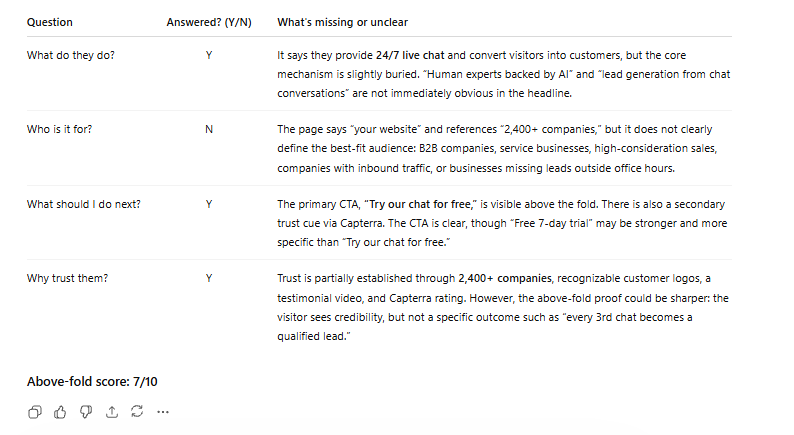
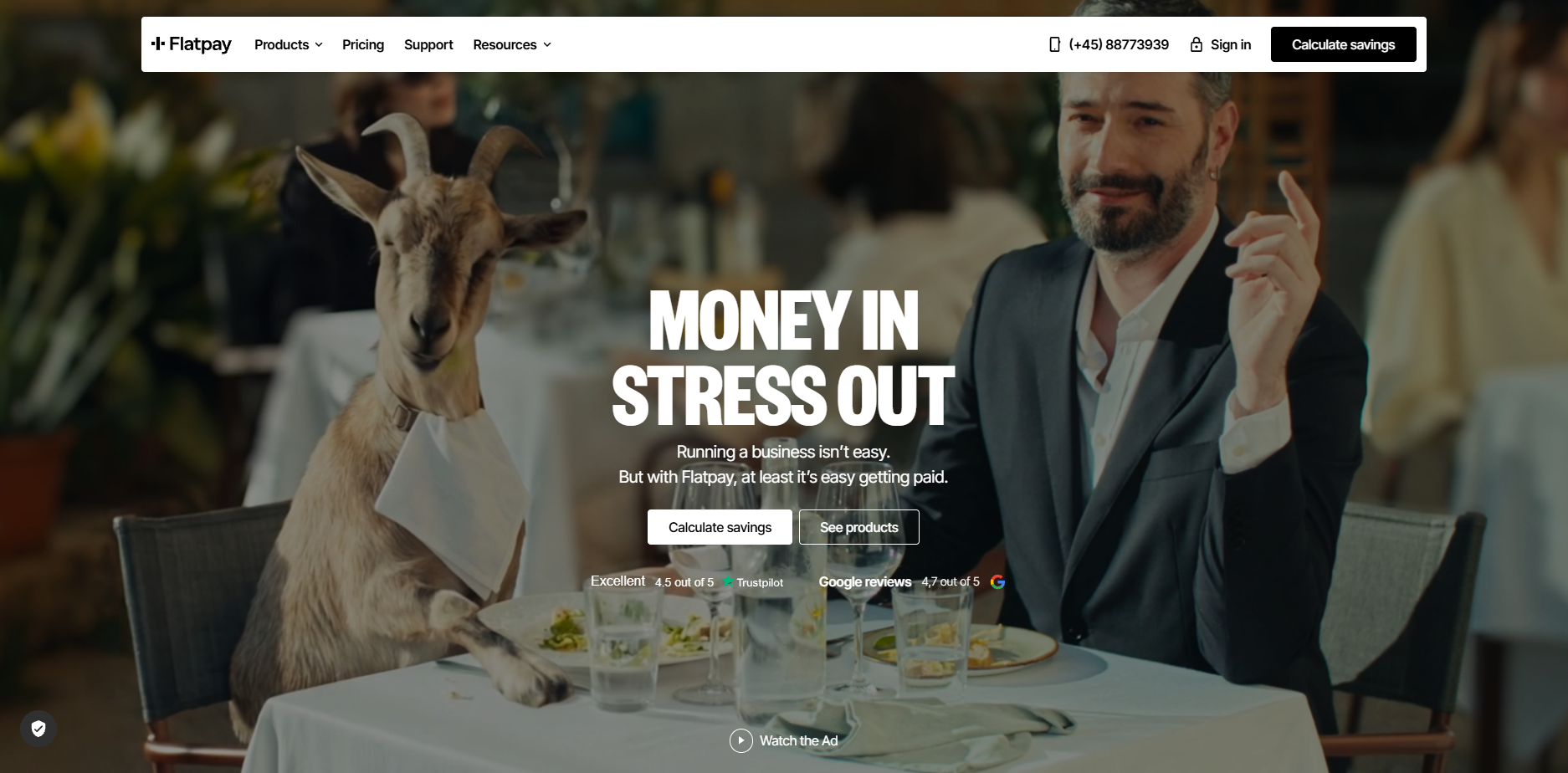
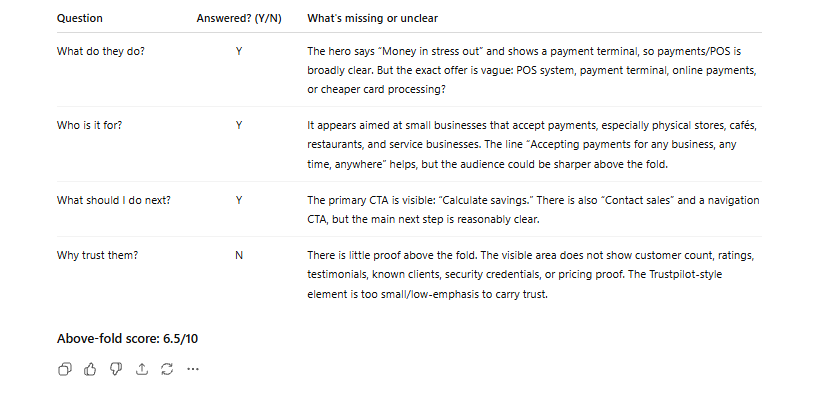
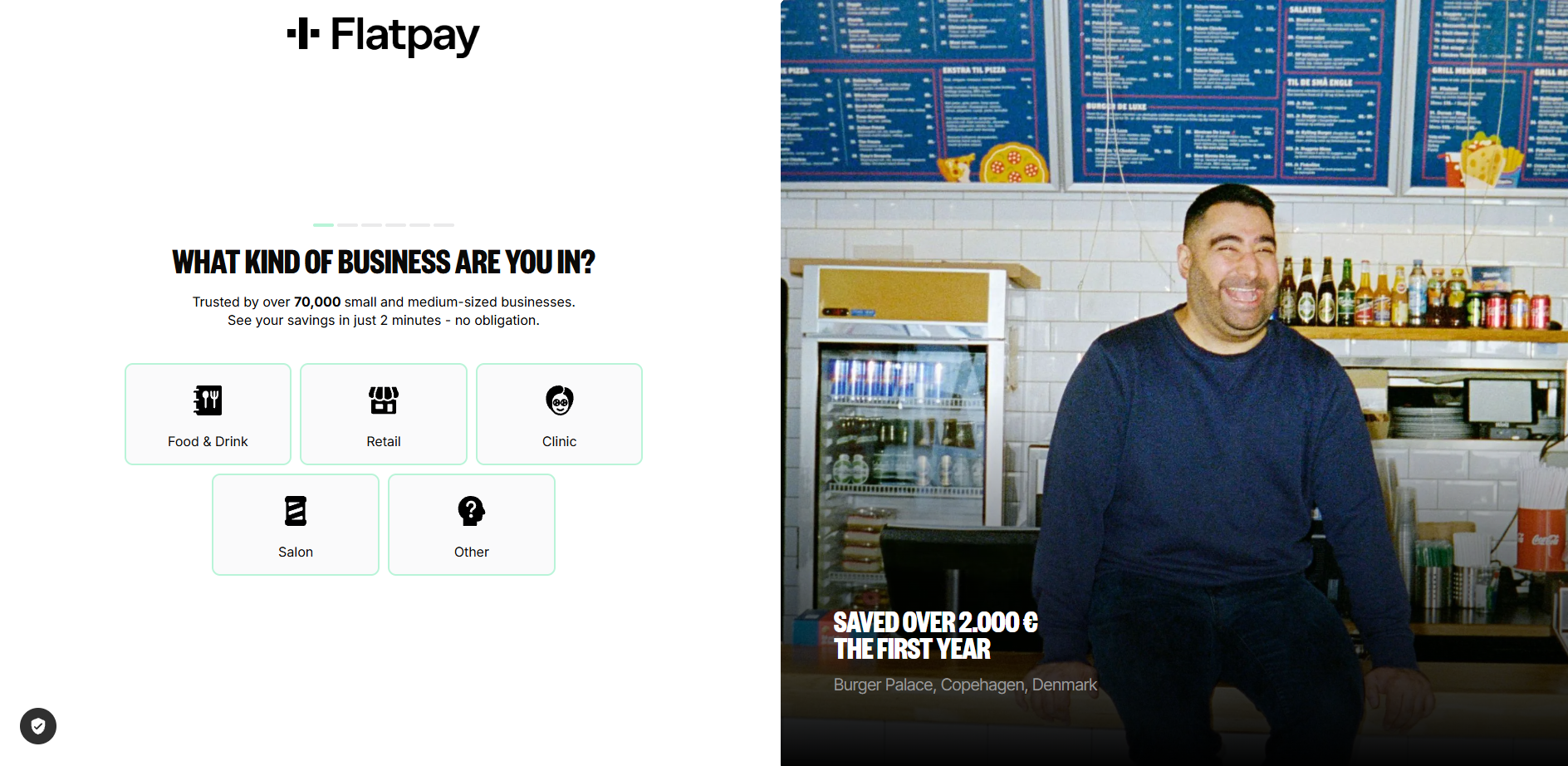
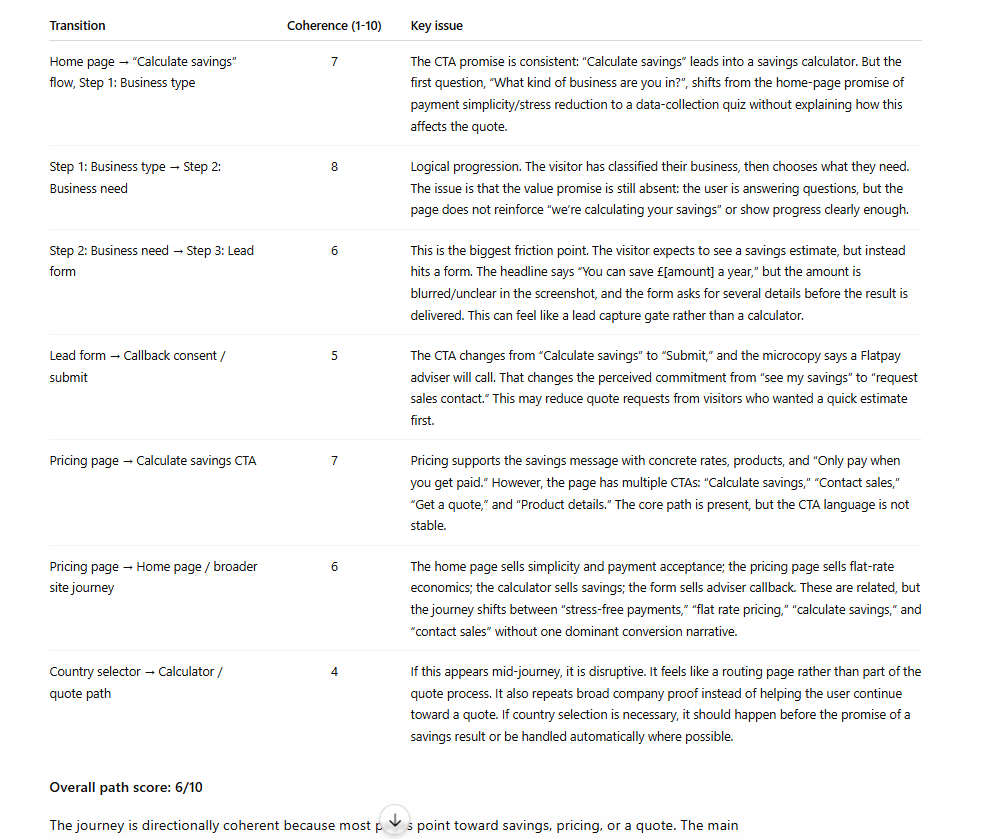
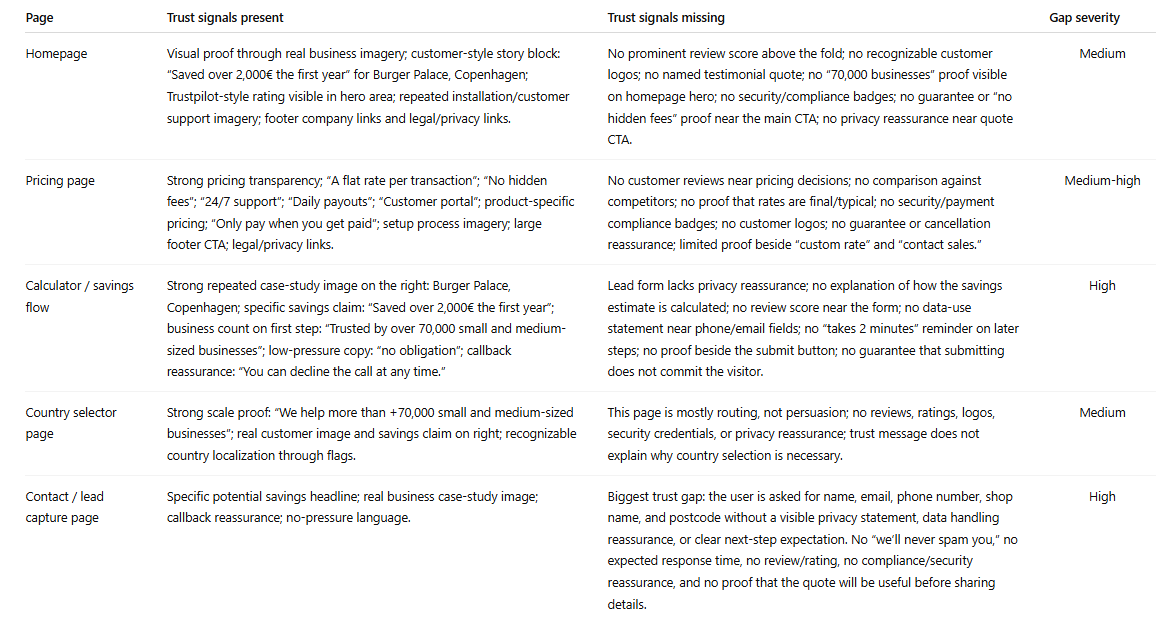
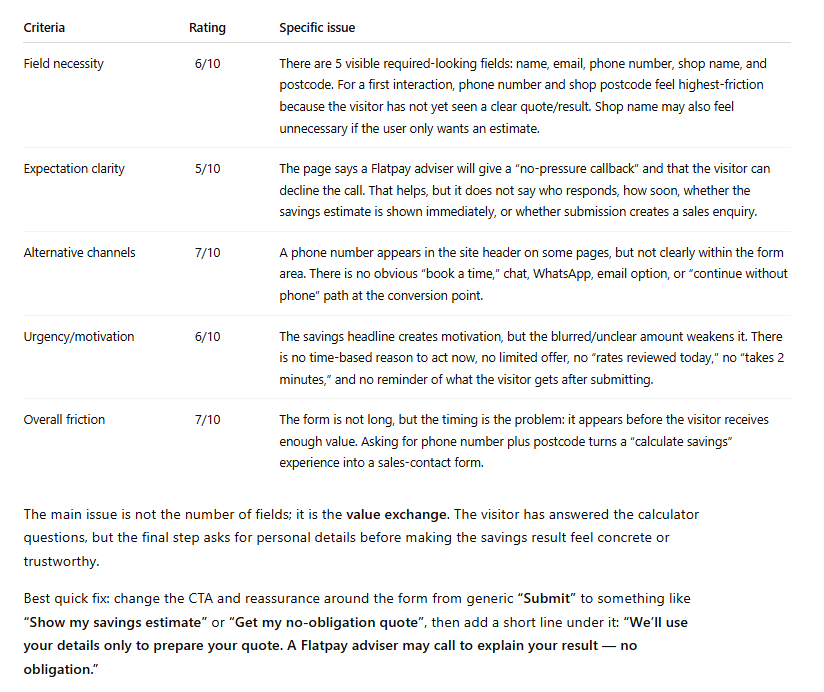
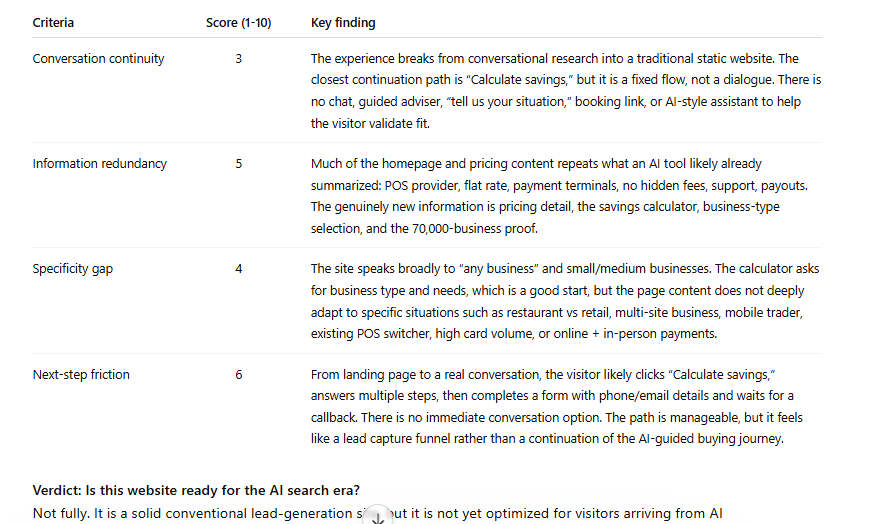
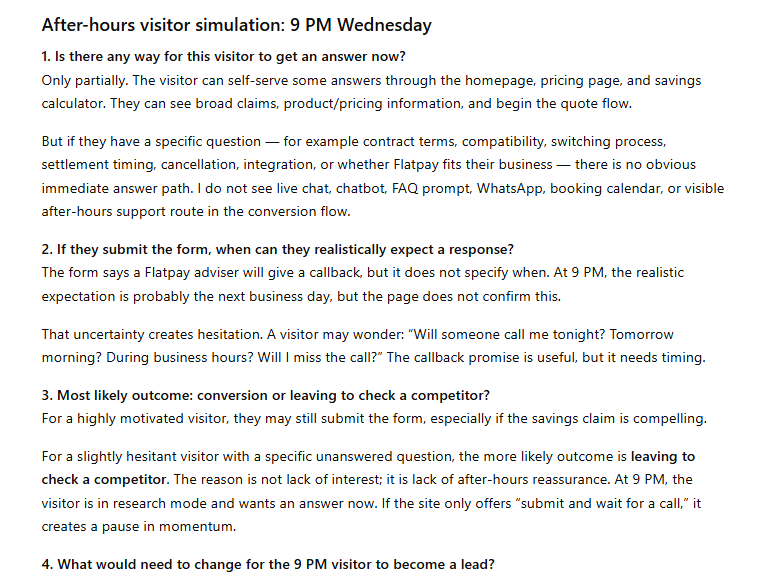
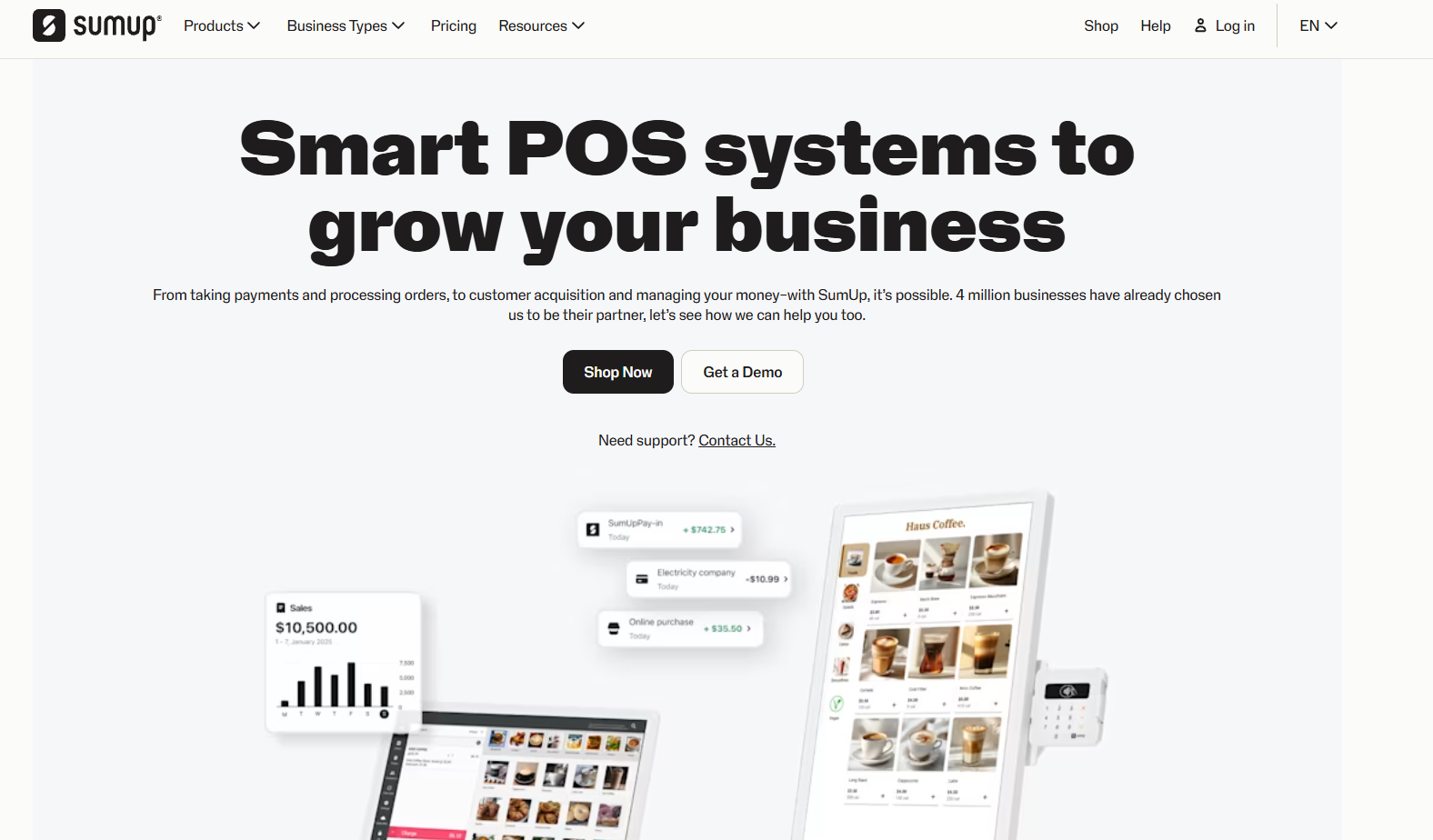
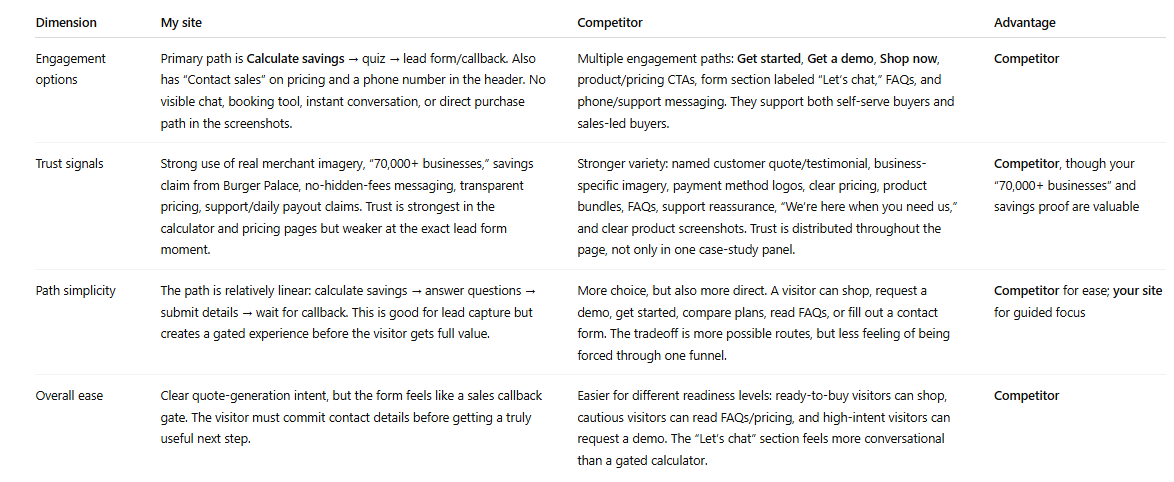
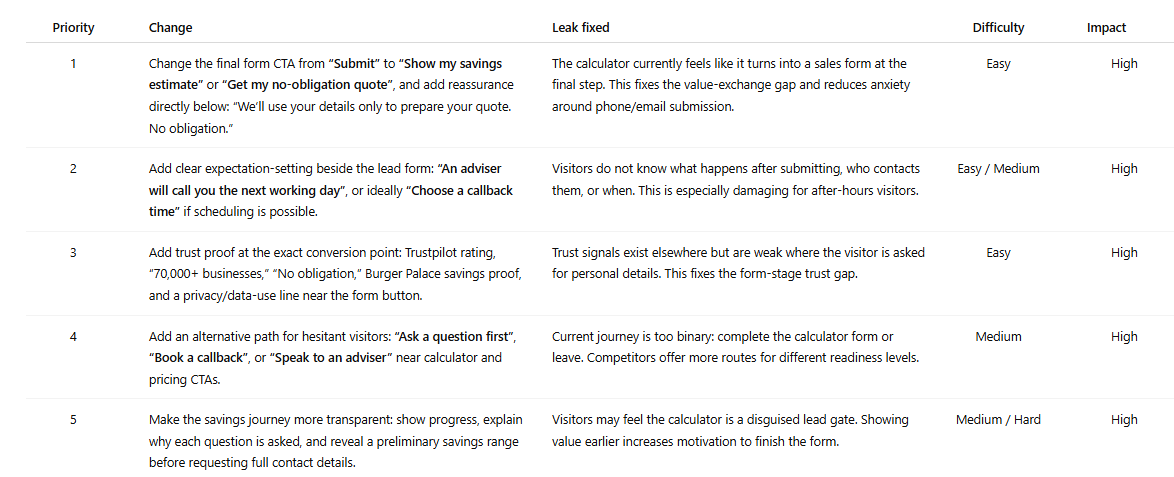

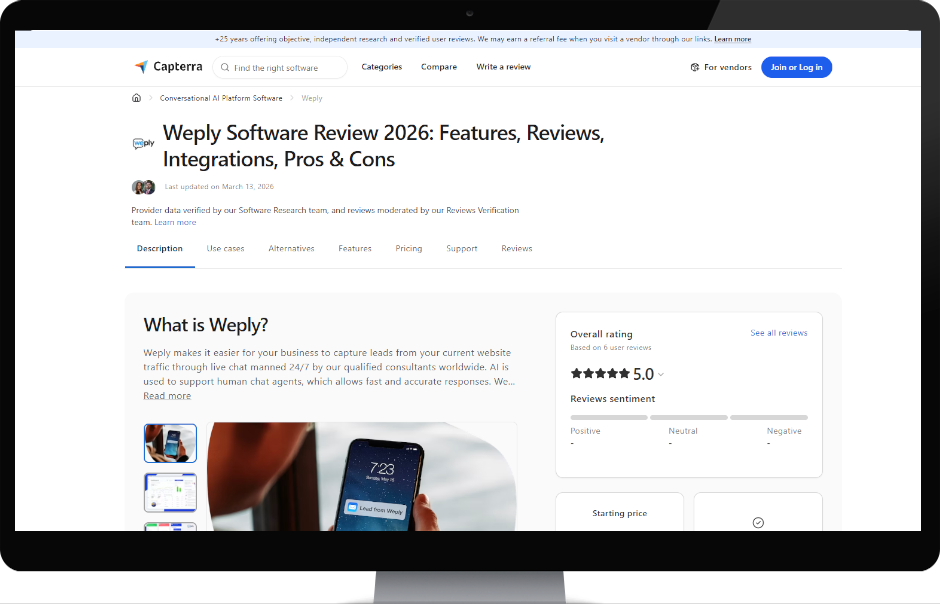
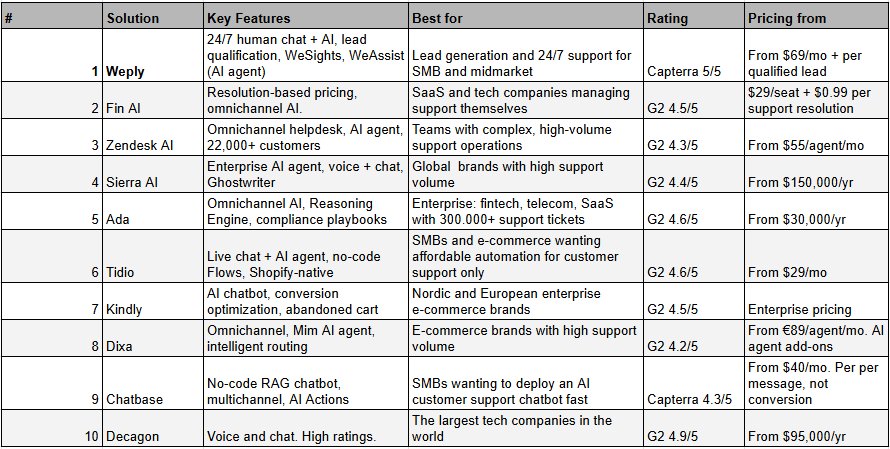

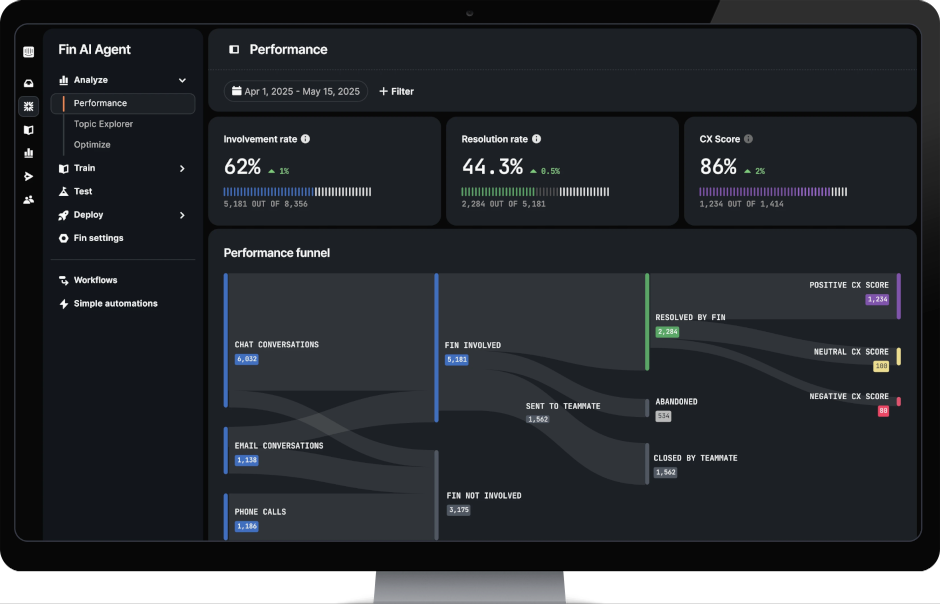
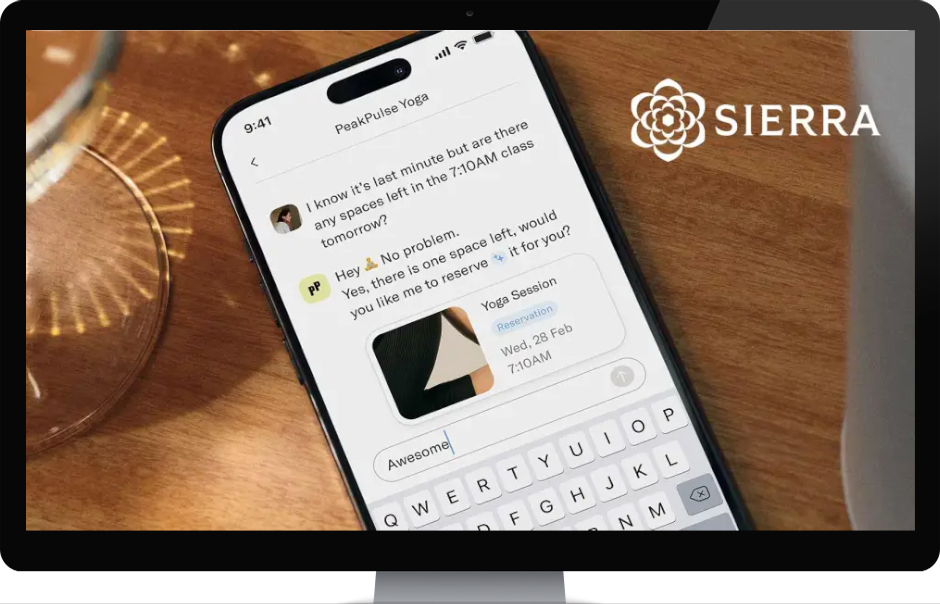
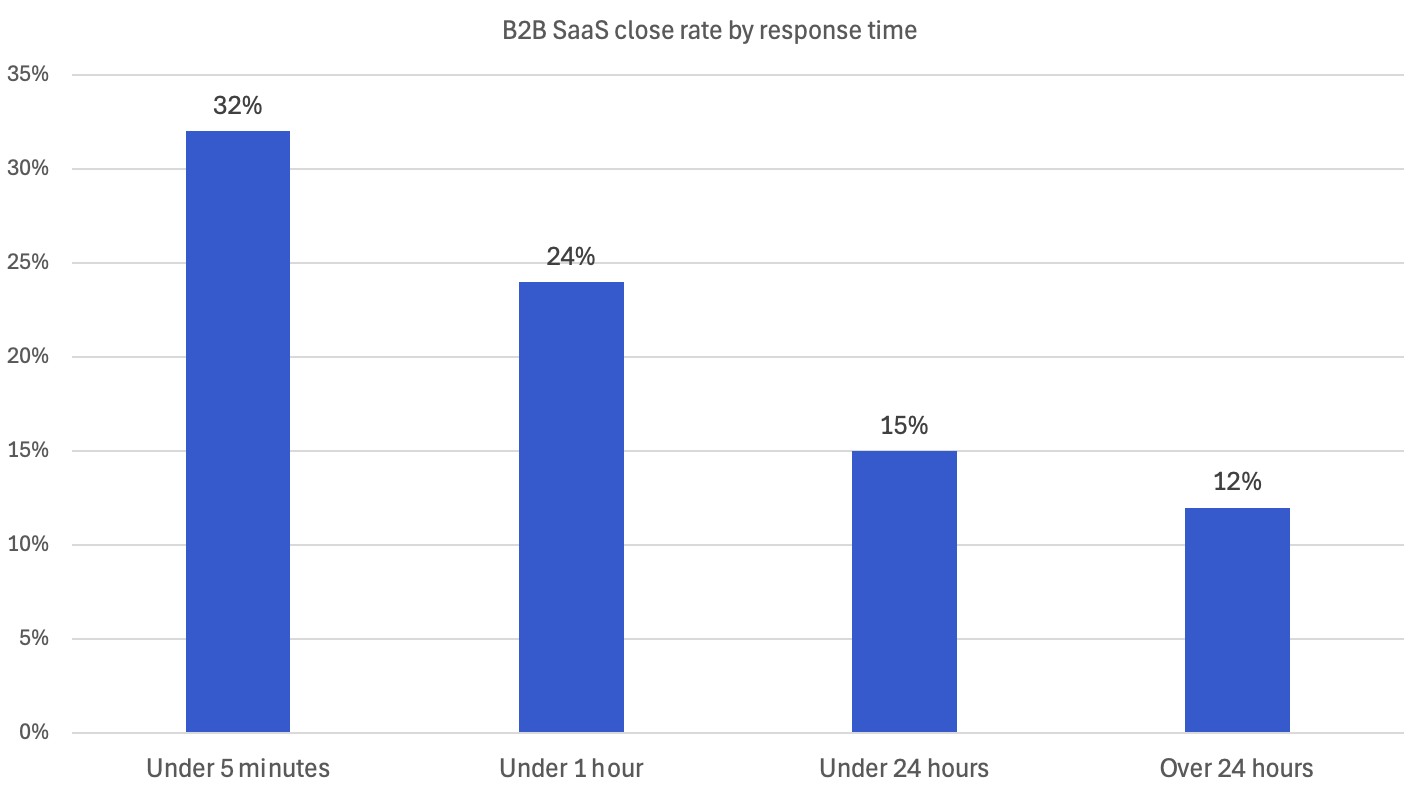
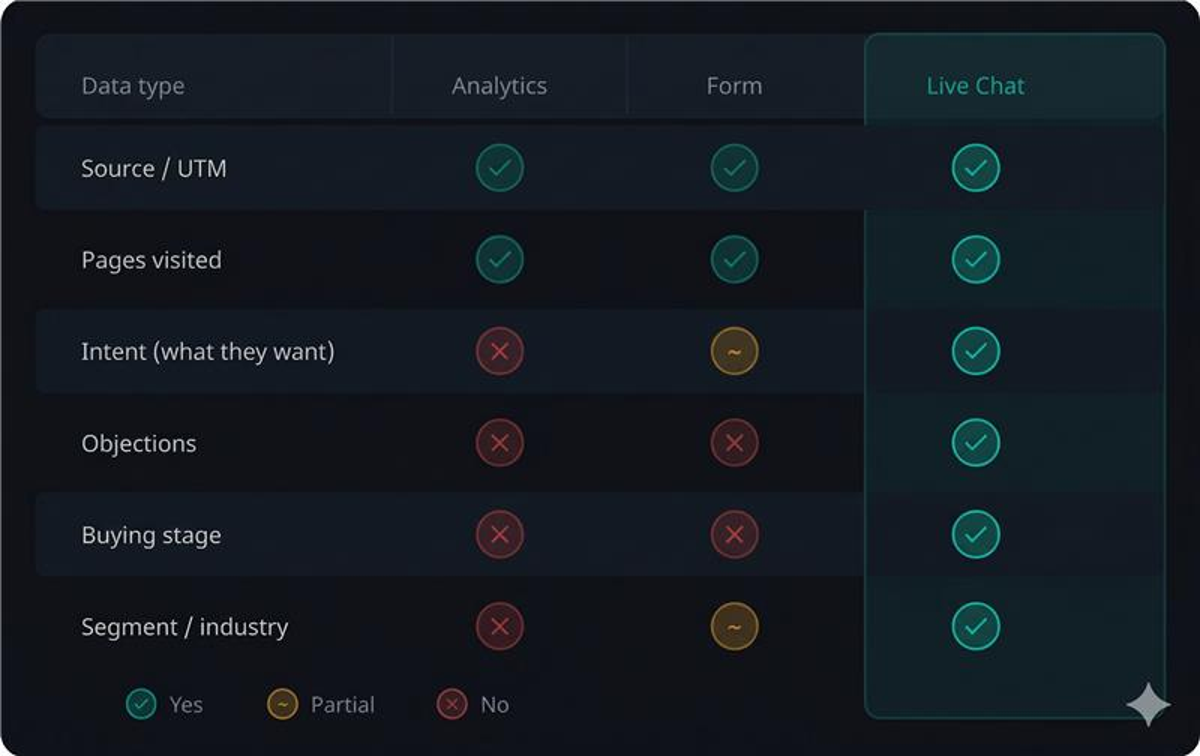
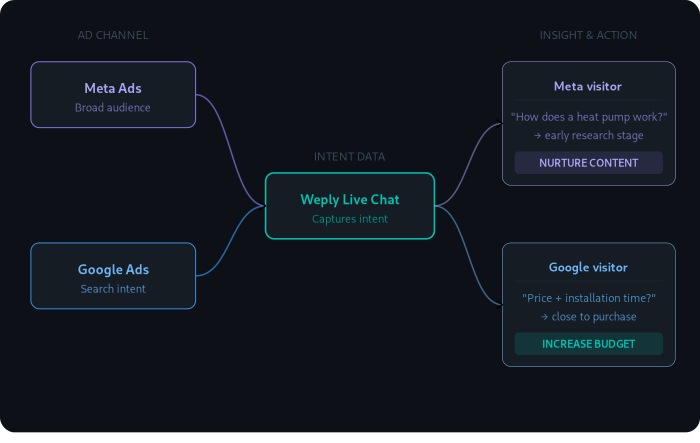
.png)







.png)